
Digitalis purpurea
‘Candy Mountain’
CANDY MOUNTAIN FOXGLOVES
No Tas.
$5.50 AUD
Availability: In stock
- 1-9 pkts $5.00
- 10 pkts FREE
- Express post $12
Digitalis purpurea ‘Candy Mountain’
CANDY MOUNTAIN FOXGLOVES
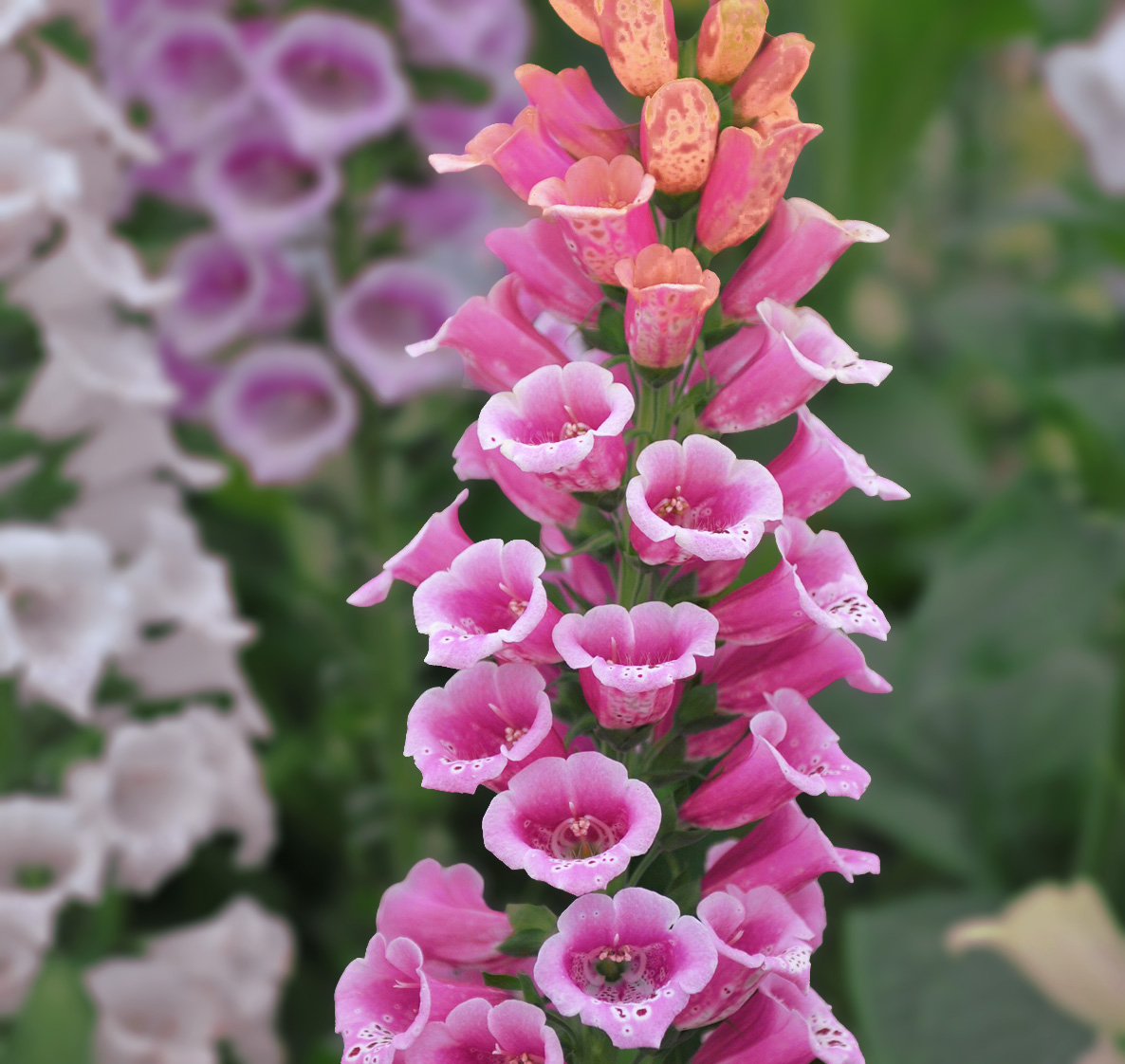
Digitalis purpurea ‘Candy Mountain’ is a new breakthrough in Foxglove breeding, with HUGE, UP FACING “Fox’s Gloves” flowers.
Not permitted for entry to Tasmania.
Mountains of candy pink
Each individual flower on ‘Candy Mountain’ is huge – much bigger than normal “Fox’s Gloves”.
And the big blooms are close packed up the tall flower spires – so they do indeed look like soaring mountains of sugar candy.
Candy rose-pink flushed with peach
The colour is delightful candy rose-pink, flushed with peach in the buds.
Huge blooms with up facing flowers
Apart from bloom size, the wonderful thing is that the flowers LOOK UP – rather than drooping down like normal Foxglove flowers.
Trumpets look up to show off heavily spotted throats
The throats of Candy Mountain’s trumpets are heavily speckled with white, and spotted with deep maroon polka dots.
So the up-facing flowers show off their internal beauty perfectly, instead of shyly nodding.
No bobbing down for you to enjoy gazing into these charming flowers.
Longer blooming than traditional Foxgloves
Digitalis purpurea ‘Candy Mountain’ blooms for much longer than traditional Foxgloves, beginning in late spring and continuing on well into summer with multiple side spikes.
Low rosette of evergreen foliage
Plants of ‘Candy Mountain’ form a low rosette of handsome, furry leaves and the clump remains evergreen throughout the years.
Then in late spring the spires of blooms begin.
Abundant spires in summer with a repeating crop
‘Candy Mountain’ is also remarkable for the number of spires each clump produces.
These plants are not just “one-hit” wonders.
Excellent spires for florists
The flower stems of Digitalis ‘Candy Mountain’ make excellent vase flowers for florists.
Especially with their very big trumpet blooms, so closely packed, and showing off their spots.
For best vase life
So for best vase life – the stems should be cut when about 1/3 of the bells have opened.
Then they will continue to open up the stem while in the vase.
Bees & birds are in bliss
Our native honey-eating birds are in a frenzy of summer nectar gathering, while the bees and pollinating butterflies blissfully forage amongst the ‘Candy Mountain’ bells for weeks.
While rabbits & deer won’t touch with a barge pole
Rabbits and deer give clumps of Digitalis purpurea ‘Candy Mountain’ a wide berth.
They are perfectly aware that eating Foxgloves is toxic.
Though of course when used correctly, Foxglove chemical compounds are the basis of our modern, life-saving heart medications.
Hardy & healthy in a wide range of conditions
Plant Digitalis purpurea ‘Candy Mountain’ in either shaded or sunny sites.
Once established the clumps are not water-hungry, and can tolerate some periods of dry between drinks.
They can also tolerate a wide range of soil conditions and soil pH, from acid to alkaline.
Low maintenance plants
Things rarely if ever go wrong with Candy Mountain Foxglove plants.
The only potential work is to cut back spent flower stems to encourage more side spikes to develop through the season.
Flower spires are 60-90cm. High approx. soaring above an evergreen foliage clump 45-60cm. Wide approx.
SEED SOWING ADVICE: QUICK & EASY
Suitable for beginners & gardening with kids
Sow Digitalis purpurea ‘Candy Mountain’ seeds outdoors in spring by scattering directly in the garden.
OR
Sow indoors at any time, whenever suitable temperatures are available (15-20°C.) for maximum germination rate.
Sow indoors for quick & early plants: First sow the Digitalis seeds in a punnet/pots on the surface of good quality seed raising mix.
But do not cover with mix, as these seeds need light to germinate.
Then thoroughly moisten the mix by standing the sown punnet in a shallow water bath.
And allowing the moisture to percolate to the surface from below.
Now place the punnet in a warm, well-lit place (but not in any direct sunlight).
You can use a heat mat if you have one, but it is not essential, as these seeds are willing germinators.
Continue to keep consistently moist by misting regularly from a spray water bottle.
And covering the punnet with a clear plastic lid / bag helps to retain consistent moisture.
Temperatures of 15-20°C. are ideal for rapid and maximum germination.
Seeds germinate in 14 to 21 days approx.
Then pot on the seedlings as soon as the first set of true leaves develop – to harden off and mature. Before finally planting out in the garden.
Seed Count: 20 seeds per pack approx.
(We always aim to exceed the stated seed count and give a generous serve)
Click here for Nursery Open Days & Open Gardens Information
https://www.gardivalia.com.au/open-gardens
Click here to go back to Seeds Shop
https://www.seedscape.net.au/shop/
Related products
-
 Add to WishlistAlready In WishlistAdd to Wishlist
 -
 Add to WishlistAlready In WishlistAdd to Wishlist
 -
 Add to WishlistAlready In WishlistAdd to Wishlist
 -
 Add to WishlistAlready In WishlistAdd to Wishlist