
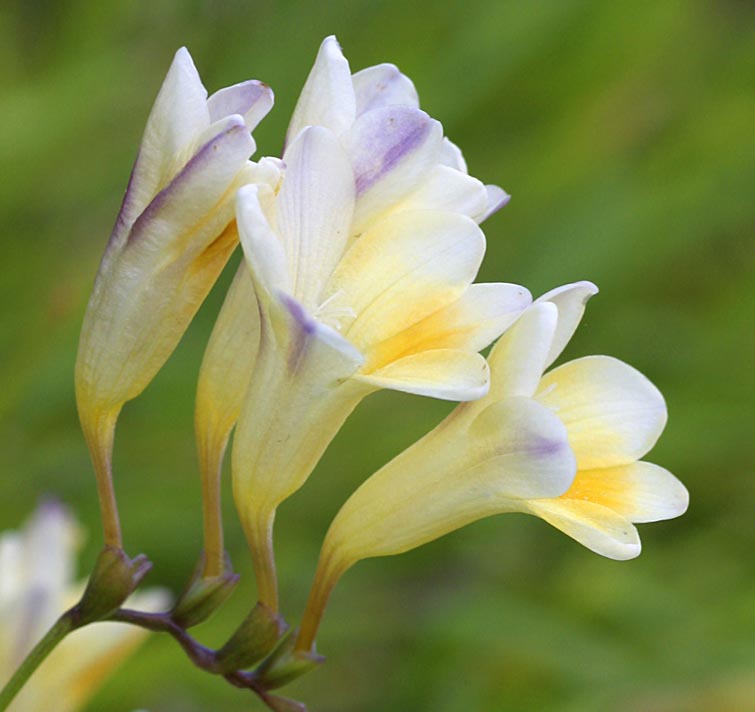
Freesia refracta
GRANDMA’S FRAGRANT OLD FREESIAS
$5.50 AUD
Availability: In stock
- 1-9 pkts $5.00
- 10 pkts FREE
- Express post $12
Freesia refracta
GRANDMA’S FRAGRANT OLD FREESIAS
Freesia refracta is the old creamy Freesia with the INCREDIBLE perfume – that brings back such vivid memories of my Grandma’s garden.
Sweetest scent of all Freesias
The scent of Freesias is so loved – Sweet, fresh citrus, crisp, clean and spicy all at once.
And no Freesia can outscent this good old original – Freesia refracta.
With a perfume that wafts right through the garden on the spring air, and scents the house from a vase.
Beat the modern hybrids hands down for perfume
Modern hybrids may have bigger flowers and flashier colours – but they cannot rival Freesia refracta for simple beauty and intensity of perfume.
Creamy flowers with a blush of mauve and a sunshine throat
Softly creamy blooms, with a blush of mauve on the backs of the petals, and the throats brushed with sunshine yellow.
The trumpets on Freesia refracta may be smaller than modern hybrids, but they win on charm.
Cunning trick to woo the bees
Flower heads are made up of 5 – 10 creamy trumpets.
Which look up at you thanks to the cunning trick of the plant to put a kink in the stem – to make sure the flowers are always beaming up at the bees.
And of course the bees (both native and honey-bees) cannot resist – they simply swoon into the scent.
Beloved cut flowers
No-one can resist buying a bunch of Grandma’s Old Freesias in spring, and sniffing them all the way home.
Stems are long enough for small to medium vases (simple informal arrangements are lovely – they need no companions to enhance them).
Picking for best vase life
Cut the stems when the first flower in the head has opened, cut right back to the base.
Use unchlorinated water in the vase if possible, and add some flower food.
Then the flowers will usually have a good vase life of 7-12 days, especially if the water is changed.
Quick from seed to flower
Freesia refracta is easy and quick to grow from seed to flowering size corm.
And this is a chance to get the true, old, original wild species (with the scent-sational perfume) rather than a hybridized version.
From sowing the seed to sniffing your first flowers is usually 2 springs.
Where to plant original old Freesias
This is the old, original wild Freesia from South Africa’s Cape Provence – so it is perfect for Australian gardens with winter rainfall and hot, dry summers.
No need to lift & replant
The flowering size bulbs can be left in the ground for many years – so choose a site with well drained soil (they resent heavy clay which will rot in them in the winter).
Full sun to part shade
Freesias can be planted in Full Sun to Part Shade positions (depending on the climate).
Needing a minimum of 3 hours of full sun a day.
In hot areas they appreciate some shade for part of the day / while in cool areas they prefer more sun hours.
Ideal planted under deciduous trees & shrubs
They are ideal under deciduous trees and shrubs, where they receive full sun in the winter, then some shade in the summer.
They enjoy mulch in the summer, which also improves the organic matter in their soil – all good.
Perfect in a pot – where you never miss a sniff
Freesia refracta are superb mass planted in a pot that you can enjoy during the growing and flowering season (put it right by the back door so you never miss a sniff).
Then you can tuck it out the back out of sight over summer, for the corms to rest (the corms will love it).
But make sure you feed the pot during the growing season.
Rabbit & deer resistant
Fortunately rabbits and deer do not like Freesias on their menu, and would rather pass by to tastier greens.
SEED SOWING ADVICE: QUICK & EASY
Seeds are best sown in autumn.
Freesia refracta is one of the easiest and quickest corms to grow from seed to flower – so it is a great way to get a colony started of the old, original wild Freesias.
Sow indoors for optimum germination: First soak the seeds overnight in tepid water.
Sow in the morning, or if you have to wait till later change the water.
Then sow the seeds in a punnet or small individual pots, on the surface of good quality seed raising mix.
Then cover the seeds with sieved mix or fine moist vermiculite – to a depth of approx. 6mm. But do not bury deeply.
Now thoroughly moisten the punnet by standing it in a shallow water bath.
And allow the moisture to percolate up to the surface of the mix from below.
Seeds like warm
Drain, then place the moist, sown punnet in a warm, well-lit position (not in any direct sunlight as this will dry the seeds out and prevent germination).
Temperatures around 15-18°C are optimum.
If you have a heat mat to maintain warm temperatures it is beneficial, though not essential as long as you can provide suitable temperatures.
Continue to keep the punnet consistently moist by misting from a spray water bottle.
Covering the punnet with a piece of cardboard or black plastic will exclude light, and will also help to maintain the necessary consistent moisture.
But make sure you remove it to mist regularly, then replace.
And remove completely as soon as sprouts appear.
Seeds begin to sprout in approx. 21 days.
but please don’t lose interest – It is a natural defence of this plant to stagger the seed germination – to give some seeds a sporting chance to emerge into favourable conditions.
Prick out individual seedlings as soon as they look like little grass sprouts, pot on to grow on.
And ensure they have good bright light and gentle feeding so they build a corm quickly.
Seed Count: 10 seeds per pack.
(We always aim to exceed the stated seed count and give a generous serve ).
Click here for Nursery Open Days & Open Gardens Information
https://www.gardivalia.com.au/open-gardens
Click here to go back to Seeds Shop
https://www.seedscape.net.au/shop/
Related products
-
 Add to WishlistAlready In WishlistAdd to Wishlist
 -
 Add to WishlistAlready In WishlistAdd to Wishlist
 -
 Add to WishlistAlready In WishlistAdd to Wishlist
 -
 Add to WishlistAlready In WishlistAdd to Wishlist