
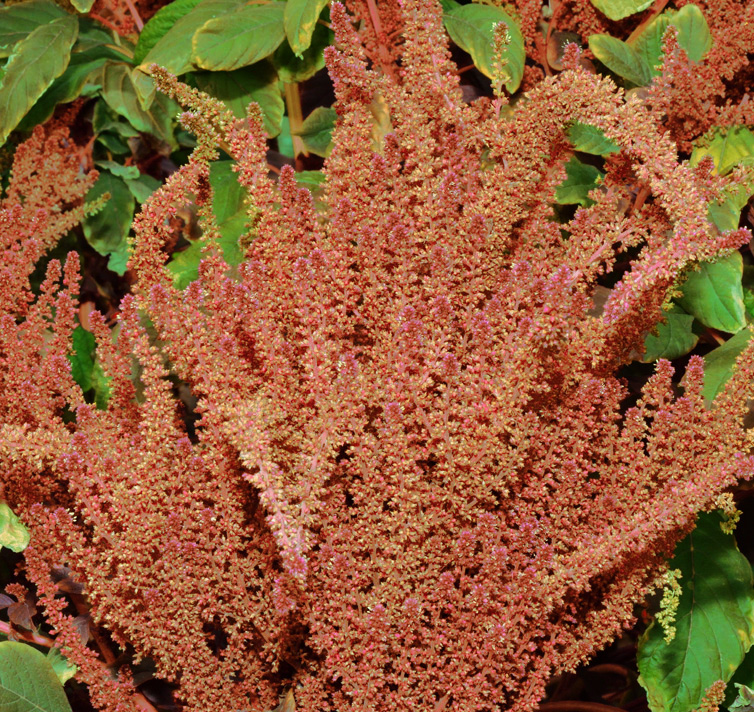
Amaranthus cruentus
‘Autumn’s Touch’
AUTUMN’S TOUCH AMARANTH
$5.50 AUD
Availability: In stock
- 1-9 pkts $5.00
- 10 pkts FREE
- Express post $12
Amaranthus cruentus ‘Autumn’s Touch’
AUTUMN’S TOUCH AMARANTH
Amaranthus cruentus ‘Autumn’s Touch’ is one of the
MOST POPULAR FOR FLORISTS – because of its subtle colour blends.
Gentle autumn shading from soft copper, through creamy rust, to apple green
Because of the gentle shadings of autumn colours.
From soft copper, through creamy rust, luscious honey to apple green, and all subtle blends in between.
The name ‘Autumn’s Touch’ is the perfect description.
Amaranth is a super-food (& very decorative in the veggie patch & vase)
Amaranth has long been grown as a nutritious seed and vegetable crop, and is still a very popular product on the shelves of health food stores.
Super star for florists
But the major consumers of Amaranthus cruentus ‘Autumn’s Touch’ are florists – they can’t get enough of it at the moment.
Spectacular in the flower garden too
‘Autumn’s Touch’ is just as spectacular in the decorative flower garden.
As it is yummy in the edible garden, and essential for floristry.
Dramatic in summer & autumn
Being tall, statuesque, and dramatic in late summer and autumn, when many other flowers have already faded.
Grand feathers the colours of a gentle autumn
Amaranthus cruentus ‘Autumn’s Touch’ always catches the eye with such very large, feathery plumes.
With each plume differently shaded through all the gentle autumn tones.
Superb cut flowers with sophisticated colours
The plumes of ‘Autumn’s Touch’ give great texture and shape in a vase.
And last so well in a vase as fresh cut flowers.
Good dried flowers too
They also dry well for use in long term arrangements, and hold their subtle colours well when dry.
So hang them upside down in a dry place, with no direct sunlight so they retain their autumn tones for many months.
Gluten-free & versatile ingredient for cooks
The leaves of Amaranthus cruentus ‘Autumn’s Touch’ are a rich source of both Vitamin C and iron.
They taste like Spinach and are cooked and served as you would Spinach.
Delicious in stir fries, steamed with lemon and garlic, or tossed into pasta and pizza.
Healthy source for calcium and protein for vegans & gluten free
However it is the abundant seed heads that are the culinary prize, especially for vegans, vegetarians and the gluten-intolerant.
Harvested grain has a nutty flavour and is a rich source of calcium and plant protein.
With approximately 30% more protein content than wheat, rice, rye and oats.
Amaranth flour and grain is also used in the production of gluten-free bread, porridge, muesli and popcorn.
Tall & impressive plants
Plants of Amaranthus cruentus ‘Autumn’s Touch’ rapidly grow into strong branching heads of coppery plumes 1-1.2m. High.
Unfussy to grow
Plants of ‘Autumn’s Touch’ enjoy Full Sun and are not fussy about soil type.
They adapt well to poorer soils
Adapting well to even poorer, less fertile soils.
Not water guzzlers
They are not water-guzzlers, though adequate, regular watering keeps them growing tall, strong and productive – so treat them like your veggies.
Stout & strong plants
The stems are very stout and strong so they do not usually need staking unless they are in very windy sites.
Tolerates hot & dry or humid climates
Amaranthus cruentus can tolerate either humid or dry climates, as it originates from across both Guatemala and Mexico.
Quick & easy from seed to flower
Amaranthus cruentus ‘Autumn’s Touch’ takes approximately 65-70 days from sowing the seeds to blooming.
Self seeds for next year
You can also leave a few plumes unharvested to go to seed at the end of the season – then your ‘Hot Biscuits’ will sow new plants for next year all by themselves.
TIP: Harvesting flowers for commercial floristry
For use fresh – cut plumes when 3/4 of the flowers are open and still soft.
They have a vase life of approximately 10 days.
For use dried – leave plumes on the plants a little longer – cut when seeds begin to form and the flowers are firm. Hang in a dry, warm place for approx. 10 days. Then they hold their colour and texture for many months.
TIP: Harvesting grain for cooking
Leave the plumes on the plants until autumn when seeds form.
Place a wide dish / bucket under the heads and gently shake and stroke.
The ripe seeds will fall easily into the dish, then come back next week to harvest again.
Copious amounts of grain for the pantry
Amaranthus cruentus ‘Autumn’s Touch’ produces copious amounts of grain which can be stored in glass containers in the pantry (or any cool, dry place out of the sun) for future use. Delicious.
SEED SOWING ADVICE: QUICK & EASY
Very suitable for beginners & gardening with kids
Amaranthus cruentus ‘Autumn’s Touch’ can be started very quickly from seed indoors, for a flying start for early and quick flower heads.
But do prick the seedlings out quickly from their punnet, or plant directly in little pots – as they quickly develop a long, strong root system. So they are great to do in Jiffy pots so they don’t need to be disturbed when planting out in the garden / field.
‘Autumn’s Touch’ can also be very successfully sown direct into the garden in spring and early summer.
But you need to wait until day and night temperatures are quite warm to sow them outdoors, as the seeds love heat to germinate.
Sow indoors for quick & early plants: First sow the seed in a punnet / small pots on surface of good quality seed raising mix.
Then gently press the seeds onto the surface of the mix, to ensure good contact.
Now cover the seeds only very lightly, as these seeds need light for germination.
And you can use sieved mix, or fine grit, or vermiculite, or washed sand to sprinkle over the seeds.
Then place the sown punnet into a shallow water bath and allow the moisture to percolate up through the mix from the bottom to the surface.
Now place the moist punnet in a warm, well-lit position (not in any direct sun – as this will dry the seeds out and prevent germination).
Amaranth love warmth to sprout
Temperatures of 17-22°C approx. are best for rapid and optimum germination.
And do use a temperature-controlled heat mat if you have one, to keep the heat up and encourage rapid germination.
A warm window-sill or well-lit corner is also fine once temperatures are warm enough.
Adding a clear plastic cover or plastic bag helps to retain consistent moisture in the punnet.
And continue to keep the punnet moist by spraying the surface of the mix with a fine spray water bottle as required.
Seedlings begin to emerge in approx. 10-14 days.
Seed Count: 120 seeds per pack approx.
(We always aim to exceed the stated seed count, and give a generous serve).
A little plant history
The botanical name of “Amaranthus” comes from ancient Greek, and means “does not wither” – very appropriate.
While “cruentus” comes from Latin and means “with a tail” – also appropriate.
Amaranthus have long been nurtured by farmers and gardeners for both nutrition and decoration, and is believed to have been farmed for over 5,000 years.
So of course Amaranthus have acquired a long list of affectionate common names, including Kiss-Me-Over-The-Garden-Gate; Prince’s Feathers; Foxtails; Tassel Flowers; Inca Wheat and Chinese Spinach – all well named.
Click here for Nursery Open Days & Open Gardens Information
https://www.gardivalia.com.au/open-gardens
Click here to go back to Seeds Shop
https://www.seedscape.net.au/shop/
Related products
-
 Add to WishlistAlready In WishlistAdd to Wishlist
-
 Add to WishlistAlready In WishlistAdd to Wishlist
-
 All
Eryngium giganteum
‘Miss Willmott’s Ghost’
MISS WILLMOTT’S GHOST SEA HOLLY
$5.50 AUD Add to cartAdd to WishlistAlready In WishlistAdd to Wishlist -
 All
Dierama pulcherrimum
‘Rose Pink’
ROSE PINK FAIRY FISHING RODS
SALE: Buy 1 get 2 packs
$5.50 AUD Add to cartAdd to WishlistAlready In WishlistAdd to Wishlist