
Adonis vernalis
DAWN OF SPRING ADONIS
$5.50 AUD
Availability: In stock
- 1-9 pkts $5.00
- 10 pkts FREE
- Express post $12
Adonis vernalis
DAWN OF SPRING ADONIS
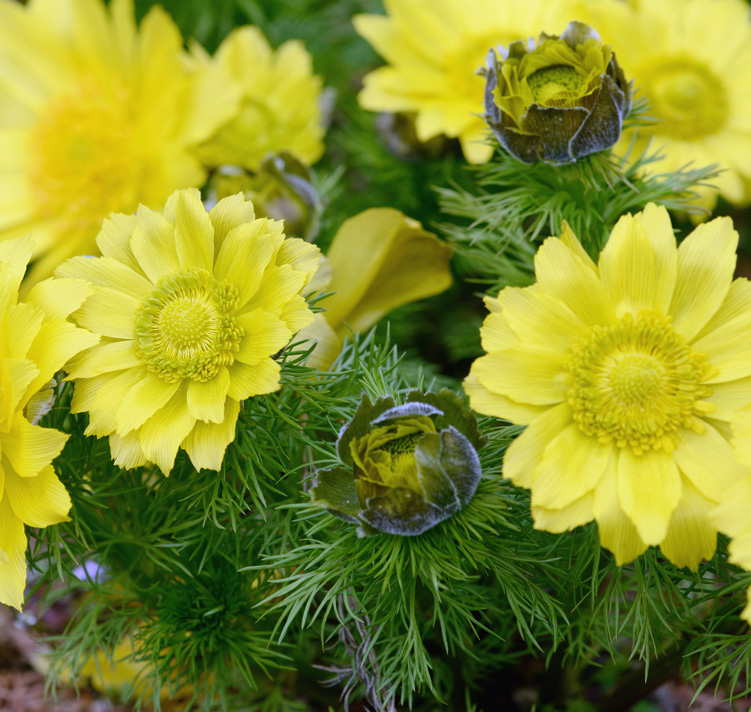
Adonis vernalis is a glow of beauty in late winter and early spring – marking the dawn of spring with golden droplets.
Late winter & dawn of spring drops of sunshine
Adonis vernalis gives drops of sunshine yellow in late winter, as they proclaim that spring is on the way and winter is finishing.
One of the first to flower with the Snowdrops
The “Dawn of Spring Adonis” is one of the very first plants to flower in the garden, along with the English Snowdrops and Hellebores.
Erupts with golden goblets above dainty feathers of foliage
As it erupts with packed clusters of golden goblets.
Large shining stars on a dainty plant
These golden goblets then open to shining stars with pointed petals.
With the petals having a glossy, shining surface texture that reflects every glimmer of light.
Each clump is packed with many golden stars – creating a bold sight, above the daintiest, ferniest, feathery foliage.
So though the plants are dainty – they proudly trumpet that winter will soon be ending.
Suits small gardens pots & edges under trees
Clumps are 15-30cm. high in flower, and 20cm. wide of beautiful fine, feathers of foliage.
The goblet-like buds emerge directly from the bare ground, then the stars open on top as the feathers of foliage push them up.
Treasure for plant-a-holics
Adonis are highly prized and lusted after by plant-a-holics.
Long lived perennial rhizome
Adonis vernalis is actually a network of perennial rhizomes.
And as such has the ability to bloom its head off; then handily go dormant in the summer to withstand the heat and dry without fuss; ready to do the show all over again next winter-spring.
With you for many years
Clumps of Adonis vernalis continue to thicken, and increase in number of flowers, year after year.
They are long-lived perennial clumps, and will herald the end of winter for you for many years – just getting better and better year after year without any fuss.
Extremely hardy & very useful in deciduous shade or open sun
Adonis vernalis is extremely hardy.
And very useful under deciduous trees where they can compete with the tree roots, as well as in sunnier open sites or grassland.
They are widespread natives of well drained, lime soils across Europe – from Italy to Siberia – so that tells you they are hardy and adaptable.
Low maintenance
Plant Adonis where it can be left to just get on with it all by itself.
They do not like being disturbed, except in the summer when they are dormant.
Low water need & easy care
“Dawn of Spring Adonis” do not require any lifting or dividing, or summer watering.
They grow and flower during the winter and spring period, then die away in a tidy fashion in summer, just like a bulb.
So avoiding the rigours, work and watering of summer, then back next winter to begin blooming again.
Toughly frost hardy
Plus they are reliably frost hardy down to at least -25°C.
Tolerates a wide range of soils
And can tolerate a wide range of soils and pH, from sandy to good garden loam, as long as the soil is well-drained; and from acid to alkaline pH, though they do relish some lime.
However they do not appreciate being water-logged and rhizomes will rot out if the soil remains boggy and wet over summer.
Rabbits, deer & even possums avoid eating it
Ideal for gardeners who have to cohabit with munching beasts.
Having evolved in a world of grazing animals – Adonis has developed natural defences.
Bees love it for winter energy
Bees and pollinators of all types love the nectar and pollen of Adonis flowers to boost their energy in late winter.
Ancient medicinal plant
Many traditional healers and different communities across Europe used Adonis vernalis to treat cardiac ailments for centuries.
Modern science has also shown interest in the chemical compounds.
SEED SOWING ADVICE:
Seed for Adonis vernalis can be sown at any time indoors except in hot weather.
It is best to time your sowing to germinate in cool weather (see below).
Tip: Adonis vernalis is a treasure, but not for the impatient.
Sow indoors: First sow the seed on the surface of good quality potting mix.
Then pat the seeds gently to the surface of the mix to ensure good contact.
Now barely cover the seeds with sieved mix or fine vermiculite.
They should not be buried deeply.
Then thoroughly moisten the mix by standing the punnet / pot in a shallow water bath.
And allow the moisture to percolate up to the surface of the mix from below.
Now place the punnet in a warm position for 4 weeks to condition the seeds ready to break their natural dormancy.
Temperatures of 15–20°C are best for this conditioning period.
And continue to keep the punnet moist by misting the surface from a spray water bottle.
Covering the punnet with a clear lid or plastic bag between mistings will also help to maintain the necessary consistent moisture during conditioning period.
Give the seeds a pretend or a real winter
After the conditioning period, now make sure the punnet is thoroughly moist and wrap it in cling-wrap or a clip-lock bag.
And place it in the fridge (not freezer) for 6 weeks of chilling.
(Or in cold climates you can leave the punnet out in the frost and cold for the winter).
This period in the fridge mimics the effects of winter on the phytohormones which inhibit germination and helps break the natural dormancy.
After the period of chilling, remove from fridge, unwrap, and place in a cool place to germinate.
Temperatures around 10-15°C are best now for germination.
Some seedlings may now germinate quite quickly, while others will take their own good time.
This is natural – so patience – do not discard the punnet too quickly.
Grow the seedings on ready to plant in the garden later.
Tip for growing on: Please note that Adonis vernalis resent disturbance during their winter-spring growing season, and can only be transplanted during summer and autumn.
So good to plant the seeds in a suitable container for growing on till then, and the seedlings will need feeding after they have germinated.
Patience: A terrible fiddle but these little winter treasures are worth every effort.
Seed Count: 6 seeds per pack approx. (Seeds of this little charmer are scarce).
Click here for Nursery Open Days & Open Gardens Information
https://www.gardivalia.com.au/open-gardens
Click here to go back to Seeds Shop
https://www.seedscape.net.au/shop/
Related products
-
 Add to WishlistAlready In WishlistAdd to Wishlist
 -
 Add to WishlistAlready In WishlistAdd to Wishlist
 -
 Add to WishlistAlready In WishlistAdd to Wishlist
 -
 Add to WishlistAlready In WishlistAdd to Wishlist