
Anchusa azurea
‘Feltham Pride’
FELTHAM’S PRIDE BUGLOSS
No WA
$5.50 AUD
Availability: In stock
- 1-9 pkts $5.00
- 10 pkts FREE
- Express post $12
Anchusa azurea ‘Feltham Pride’
FELTHAM’S PRIDE BUGLOSS
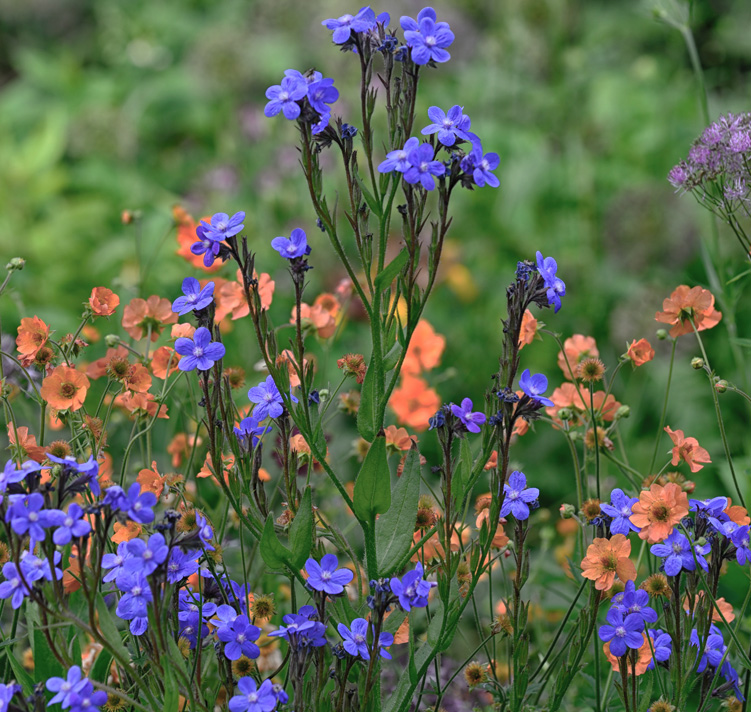
Anchusa azurea ‘Feltham Pride’ is a hit of pure blue.
Like fragments of sky falling to earth.
Not permitted for entry to WA
Pure gentian blue – like fragments of sky falling to earth
‘Feltham Pride’ is the purest of pure blue – like precious ultramarine gems.
Considered to be the bluest of all the deliciously blue Bugloss family.
Plus each flower has a small white eye as a highlight.
Flocks of flowers
Flocks of flowers are borne in wide branching heads – so while an individual flower is small, the many are massed into clouds of heavenly blue.
See-through mists of ultramarine blue
Anchusa azurea ‘Feltham Pride’ is the perfect plant to make a delicate mist of blue in the garden – light, airy and transparent – for front mid or background planting.
But on a tough, hardy and easy to grow plant
Anchusa, otherwise known as Bugloss or Alkanet, is an old time favourite that has never fallen from favour.
No wonder with that superb colouring, and tough, hardy constitution.
Long blooming spring summer & autumn
Blooming begins in mid-spring, and continues on through summer and into autumn.
And deadheading occasionally will extend the blooming season even further.
‘Feltham Pride’ is a superior and longer blooming form than the originals.
Hardy in heat & drought tolerant
Anchusa are natives of hot and dry areas around the Mediterranean.
So they is well acquainted with hot, dry summers, periods of baking heat, as well as hard frosty winters.
Full sun or part shade
Plant Anchusa azurea ‘Feltham Pride’ in full sun, or a little part shade, and it is of course drought resistant once established.
Well drained soil is preferred, and it performs best if not overfed.
Water-wise & low maintenance
So sandy soil, gravel and harder, rocky, and windy sites are just their cup of tea.
Plus they are perfectly suited for seaside planting.
‘Feltham Pride’ is compact & very garden worthy
Some of the original Anchusa varieties were much loved for their colour, but tended to be gangly, floppy growers.
But ‘Feltham Pride’ is compact and neat growing, with much branched heads – so increasing the blue mistiness and eliminating the flop (75cm. tall approx. and upright growing)
Beautiful in a florists vase
They also make excellent cut flowers for floristry with their lovely colouring, branching heads, and clean stems.
Edible flowers leaves & roots
The flowers of Anchusa make a wonderful (and very colourful) addition to salads, fruit salads, omelettes, drinks, stir fries, herbal teas or garnish.
Fully edible plants – They are a traditional ingredient in Mediterranean cuisines.
With the vitamin rich foliage being cooked like spinach and the roots used like carrots.
Bees & pollinators love Anchusa flowers too
Anchusa azurea ‘Feltham Pride’ is also popular as a companion plant for veggie and fruit gardens, as it is a magnet to pollinators.
Bees are particularly attracted to vivid blue flowers like these.
But rabbits & deer do not
While rabbits and deer tend to find it unpalatable and leave the plants alone (unless starving with nothing else on offer).
Quick & easy from seed to flower
Seeds of Anchusa can be
Hardy evergreen & self-sowing
Elegant branching flower stems approx 75cm. High, above an evergreen rosette of hairy foliage foliage approx. 40cm Wide.
Anchusa azurea ‘Feltham Pride’ is a very tough, evergreen perennial plant. It is a relatively short lived perennial, but this is not a problem as it grows easily from seed, and can self-sow in happy conditions.
SEED SOWING ADVICE: QUICK & EASY
Suitable for beginners & gardening with kids
Sow at any time of year indoors, whenever suitable temperatures can be provided (20-21°C).
OR
Sow directly in the garden in autumn, winter or spring.
Sow indoors for quick & early plants: First sow the seeds in a punnet on the surface of good quality seed raising mix.
And gently pat the seeds to the surface of the mix to ensure good contact.
But just barely cover the seeds with a fine dusting of sieved mix / or fine vermiculite, but do not cover deeply, because Anchusa seeds need light to germinate.
Now thoroughly moisten the punnet by standing it in a shallow water bath, and allowing the moisture to percolate up to the surface of the mix from below.
Drain and then place in a warm, well-lit position (not in any direct sunlight as this will dry the seeds out too much).
Temperatures of 20-21°C approx. are best for rapid and optimum germination.
You can use a temperature controlled heat mat if you have one, to maintain consistent warmth, as these seeds respond well to gentle heat.
Continue to keep consistently moist by misting from a spray water-bottle.
Covering the punnet with a clear plastic lid or plastic bag will also help to maintain necessary consistent moisture. Remove the covering as soon as sprouts appear.
Seedlings begin to emerge in approx. 7-14 days.
Prick out the baby seedlings as soon as they emerge and develop their first set of true leaves.
And pot up to grow on to garden size.
Seed Count: 3 seeds per pack (Apologies – ‘Feltham Pride’ is a superior and sought after variety and seeds are scarce).
Click here for Nursery Open Days & Open Gardens Information
https://www.gardivalia.com.au/open-gardens
Click here to go back to Seeds Shop
https://www.seedscape.net.au/shop/
Related products
-
 Add to WishlistAlready In WishlistAdd to Wishlist
 -
 Add to WishlistAlready In WishlistAdd to Wishlist
 -
 Add to WishlistAlready In WishlistAdd to Wishlist
 -
 Add to WishlistAlready In WishlistAdd to Wishlist