

Cerinthe major ‘Purpurescens’
PURPLE WAX FLOWER
$5.50 AUD
Availability: In stock
- 1-9 pkts $5.00
- 10 pkts FREE
- Express post $12
Cerinthe major ‘Purpurescens’
PURPLE WAX FLOWER or HONEYWORT
Cerinthe major ‘Purpurescens’ has lovely sea blue-jade-silver leaves spiralling up the 60cm. stems.
Sea blue-jade-silver leaves
Topped by clusters of rich, deep purple/blue bells nod away on top.
Long blooming
The lushly coloured blooms pop all summer and autumn, after starting in the spring.
A colour sensation of purple, blue & sea green
The whole ensemble of Cerinthe major var. purpurescens – leaves + flowers – is a colour sensation that should not be missed.
And the waxy, lush texture as well as the unique colour makes a perfect contrast to other green companions.
“Once seen-must have”
It is a “Once seen-must have”situation for enchanting Cerinthe major var. purpurescens.
It is one of the most coveted plants in our garden for visitors.
Reliable and always there
Fortunately once you have it – you need never be without it.
This self seeding annual reliably self seeds, yet is not invasive.
It will happily pop around between the roses or fill in the gaps in your flower beds.
Cut stems till winter for lovely vases of flowers
The strong waxy stems are perfect for cut flowers, and last long in your vase. Prepare the cut flowers by singeing the ends with a flame, or dipping in hot water before putting in the cool vase water.
Revels in heat & dry
Honeywort revels in sun. As a native of Greece and Italy, it takes summer heat, and some periods of dry in its stride.
Best grown lean & mean
It is best grown a little lean and mean to produce the most flowers and dazzling coloured foliage. Because too much rich soil, fertilizer, and water will make growth at the expense of flowers and all that amazing colour.
Not fussy & suits poorer soils or seaside
Cerinthe major ‘Purpurescens’ can also tolerate Part Shade if needed.
And it is happy in any well drained soil, including sandy soils and average garden soil. it is also suitable for seaside gardens, as the waxy texture resists salt. However it will not tolerate being waterlogged or boggy.
Water-wise
A water-wise choice. So normal average garden watering is bliss for a Cerinthe major ‘Purpurescens’.
And it bounces away in either acid or alkaline lime soils, and really appreciates a dressing of lime when you do the roses.
Pest & disease free
A jaunty grower that is generally pest and disease free.
Abundant nectar for bees, butterflies & native birds
This lovely plant is a magnet for bees and pollinators, and well deserves the common name of Honeywort.
Because the tubular flowers are rich in nectar, and perfect for both native bees and honeybees.
While our precious, small, native Honeyeater birds cant believe their luck when the Honeywort starts to bloom.
Rabbit & deer resistant
Happily rabbits and deer do not particularly enjoy the teste or texture of Cerinthe (Honeywort).
It exudes a sap they find distasteful – a natural adaptation of the plant to resist the grazing animals of its native Mediterranean terrain.
45cm. High with arching stems of rich blue-violet flowers x 60cm Wide of sea blue-jade-silver leaves.
SEED SOWING ADVICE: QUICK & EASY
Suits beginners & gardening with kids
Sow seeds of Cerinthe major ‘Purpurescens’ in either autumn-early winter / or in late winter-spring.
Sow indoors for quick & early plants:
First soak the seeds overnight in warm water that has been previously boiled and allowed to cool to warm.
This will help to soften the hard seed coating and promote rapid germination.
Sow the seeds into individual pots of good quality seed raising mix.
Now cover the seeds with approx. 5mm of sieved mix / grit / washed sand.
Small pots are preferred over a punnet, as the new plants very quickly develop a strong tap root.
Now thoroughly moisten the pots by standing in a shallow water bath and allowing the moisture to percolate through to the top of the mix from below.
Then place in a warm position, or on a heat heat mat if you have one.
However a warm, well lit corner or window sill is fine (not in any direct sun).
As these seeds are easy to germinate.
Temperatures of 15-20°C are ideal for rapid and optimum germination.
Continue to water the sown pots well.
And germination takes 14-28 days approx.
Or scatter the seeds directly in the garden: In August / September the seed can also be sown directly where it is to flower.
Seed Count: 10 seeds per pack approx.
GROWING: Cerinthe major ‘Purpurescens’
Height with flowers: 60cm. approx.
Width: Arching 60cm.
Position: Full Sun or Partial Shade.
Soil: Not fussy.
Other benefits
Frost: Hardy in even severe frosts. Although the parent plant dies away in the frost, the seedling babies grow during the winter ready to put on their colourful show as the season warms.
Growth: A very reliable self seeding annual. So the crop of babies will pop up around the parent.
Beneficial for wildlife: Bees, butterflies and small honey-eating birds are besotted by the dangling bells and their abundant nectar.
Easy low care
Care: Very easy and low maintenance. So you can weed out the spent plants after they have dropped their seed and that is about it!
Deer & Rabbit resistant: Sadly not immune to nibbles, but Cerinthe will always start from seed again if the plants do happen to get eaten.
Origin: Native to southern Italy and Greece, where it grows in open areas, including rocky outcrops.
Myths & Legends: The name Cerinthe comes from the Greek word “keros” for wax and “anthos” for flower, since traditional village beekeepers thought their bees got wax for their hives from the flowers.
Click here for our Nursery Open Days & Open Gardens Information
https://www.gardivalia.com.au/open-gardens
Click here to go back to Seeds Shop
https://www.seedscape.net.au/shop/
Related products
-
 All
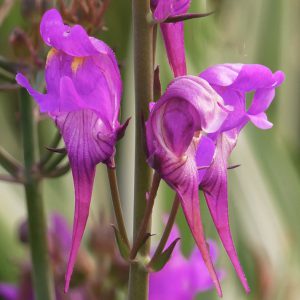
AllLinaria triornithophora
‘Three Birds Flying’
3 BUDGIES
SALE: Buy 1 get 2 packs
$5.50 Add to cartAdd to WishlistAlready In WishlistAdd to Wishlist -
 Add to WishlistAlready In WishlistAdd to Wishlist
 -
 Add to WishlistAlready In WishlistAdd to Wishlist
 -
 Add to WishlistAlready In WishlistAdd to Wishlist