
Meconopsis baileyi
HIMALAYAN BLUE POPPY
$5.50 AUD
Availability: In stock
- 1-9 pkts $5.00
- 10 pkts FREE
- Express post $12
Meconopsis baileyi
HIMALAYAN BLUE POPPY
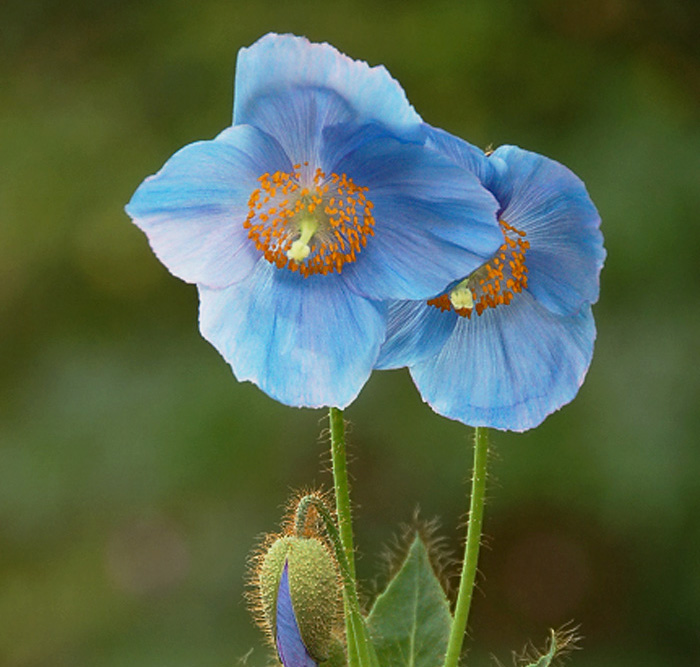
Meconopsis baileyi is the legendary Himalayan Blue Poppy.
Once seen always lusted after
Once seen in bloom, never forgotten, and always lusted after.
Besotted gardeners will walk over cut glass to have Himalayan Blue Poppies blooming in their garden.
Flocks of spectacular poppies in all shades of blue
Meconopsis baileyi bears flocks of large, spectacular poppies in all shades of kingfisher blue.
The silky petals are so fine they are almost translucent, and breathtakingly beautiful as they flutter in the breeze in spring & summer.
Handsome foliage
Blue-grey leaves perfectly complement the blues of the flowers.
Treasures for the shade
Meconopsis baileyi enjoys a sheltered, shaded, cool spot in the garden or in a pot.
And they love humus rich, damp, well drained neutral to acid soil.
The secret of success
The secret is to find a place where you can keep the humidity in the air up – so a shade house or fernery area is perfect.
The more acid your soil the more intensely blue the flowers will be. While in alkaline soil the flowers will tinge with purple (just like blue Hydrangeas).
Unlimited bragging rights
Once you have your treasures happily settled into the right spot, they will self seed for you to form colonies of breath-taking flowers on stately spires.
And then you take photographs from every angle, open a Facebook account, and brag unmercifully.
Even though they are only a short lived perennial it does not matter – they are worth everything just to see Himalayan Blue Poppy flowers in the flesh.
75-90cm. High slender stems of flowers x 30cm. Wide flat rosette of furry blue-grey foliage.
SEED SOWING ADVICE: Meconopsis baileyi
Meconopsis seeds can be sown at any time in good quality seed raising mix, whenever suitable cool temperatures can be provided (12-15°C).
First sow the seeds in a punnet, on the surface of good quality seed raising mix.
And cover seeds thinly with sieved seed raising mix / washed sand / fine grit / or fine vermiculite..
Then thoroughly moisten the sown punnet by standing it in a shallow water bath and allowing the moisture to percolate up to the surface of the mix from below.
Now place the sown, moist punnet in a cool spot.
The position should be well-lit but not in any direct sunlight at any time, as this will dry out the seeds.
Temperatures of around 12-15°C are ideal.
And the seeds do not mind cold night temperatures.
The seeds and mix should be kept consistently moist and never allowed to dry out.
So mist regularly from a spray water bottle.
Covering the punnet with a clear plastic cover or plastic bag will also help to retain consistent moisture.
No artificial heat is needed as excess heat can cause rapid germination and fungal attack, or make the seeds go into a deeper dormancy.
Seedlings usually appear within 3 to 6 weeks but some can take much longer.
But this is a normal process in nature to stagger germination, to ensure some seeds will germinate into a variety of conditions. So do be patient and do not discard the punnet.
If the seeds are shy to germinate – then wrap the moist, sown punnet in cling-wrap, and place in the fridge (not freezer) for 4-6 weeks.
This mimics a nice cold winter, and promotes germination when they are brought out to the cool place again.
When the seedlings have a set of true leaves, pot on into small pots and protect from hot sun.
Then plant out in a shaded, moist humus rich slightly acid soil.
It is natural for some Meconopsis plants to be herbaceous and die down to a large resting bud.
Seed Count: 25 seeds per pack approx.
(We always aim to exceed the stated seed count, and give a generous serve).
Click here for Nursery Open Days & Open Gardens Information
https://www.gardivalia.com.au/open-gardens
Click here to go back to Seeds Shop
https://www.seedscape.net.au/shop/
Related products
-
 Add to WishlistAlready In WishlistAdd to Wishlist
 -
 Add to WishlistAlready In WishlistAdd to Wishlist
 -
 Add to WishlistAlready In WishlistAdd to Wishlist
 -
 Add to WishlistAlready In WishlistAdd to Wishlist