
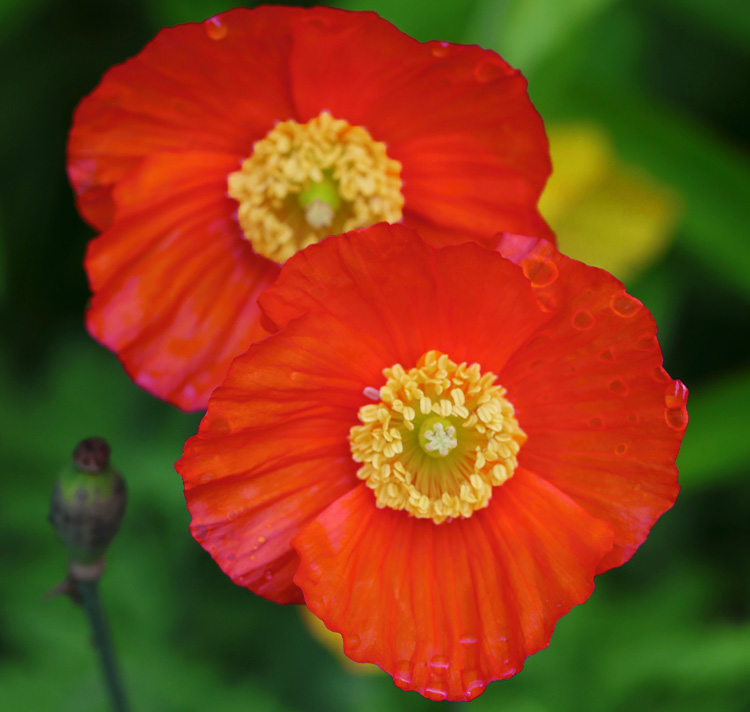
Meconopsis cambrica
‘Francis Perry’
FRANCES PERRY’S RED WELSH POPPIES
$5.50 AUD
Availability: In stock
- 1-9 pkts $5.00
- 10 pkts FREE
- Express post $12
Meconopsis cambrica ‘Frances Perry’
FRANCIS PERRY’S RED WELSH POPPIES
Meconopsis cambrica ‘Frances Perry’ is the highly desired, rarely found, red form of the old favourite Welsh Poppy.
Flocks of dainty silken red poppies
Meconopsis cambrica ‘Frances Perry’ bears flocks fire red poppies of the most luminous texture.
The silky petals are so fine they are almost translucent, and breathtakingly beautiful as they flutter in the breeze in spring, summer and autumn.
Floating above pretty ferny foliage
Finely cut and divided leaves of fresh green, perfectly complement the dainty, fiery flowers.
Prolific & long bloomers
Welsh Poppies give months of colour, with a continuous procession of blooms popping right through from spring, into summer and autumn.
Each flower is approx. 5cm. across, and each plant produces many, many on branched stems.
Glowing treasures for the shade
Meconopsis cambrica ‘Frances Perry’ enjoys a sheltered, shaded, cool spot in the garden or in a pot.
Intense flower colour lights the shade
Where the intense flower colour really lights up shaded areas.
Dappled sun and shade; morning sun only; to fully shaded spots are perfect – but definitely out of the hot afternoon sun.
And they love humus rich, neutral to acid soil, with a special fondness for clay.
Reliable every year
Once you have Frances’ Welsh treasures happily settled into the right spot, they will self seed for you reliably every year, to eventually form colonies in any shaded area.
Easy non-fuss plants
Meconopsis cambrica ‘Frances Perry’ are great low-care, no-fuss bright spots for shaded corners.
Just leave them alone to get on with it each year.
They are perennial clumping plants, plus very reliable self-seeders, but will not come out of the shade and are not invasive.
Tolerate wide range of soils, including clay
This is one of the most delightful, easy care choices for gardeners who battle with clay – Welsh Poppies love it.
However they also grow well on any soil from sandy; gravel; through good garden loam; to clay – all providing they are out of the hot sun.
Protein bar for bees
The blooms of Welsh Poppies are rich in pollen, and flaunt their open blooms for any passing pollinator to enter.
There is no nectar, but the protein rich pollen is irresistible for feeding the baby bees.
Avoided by rabbits & deer
The sap of Meconopsis cambrica is bitter, and so makes the plants unattractive to grazing animals.
Rarely troubled by any pests or diseases & low maintenance
Plants of Meconopsis cambrica ‘Frances Perry’ are virtually free from any pests and diseases.
And no pruning or trimming is required, unless you want to tidy up over winter ready for the new crop of Welsh Poppies to come through in spring.
Shade loving perennial clump
Each plant will form a clump of delightful ferny foliage with flowers atop at 30-40cm. High x diameter of 30-40cam approx.
The clumps will be deciduous over winter in frosty places, but spring back with vigour in spring, as well as self-seeding.
SEED SOWING ADVICE: Meconopsis cambrica ‘Frances Perry’
Seeds of Meconopsis cambrica ‘Frances Perry’ can be sown at any time in a punnet or tubes, whenever suitable temperatures can be provided (10-15°C is optimum).
Temperatures above 18°C can inhibit germination.
OR
Sow outdoors at the coldest time of the year.
Sowing Indoors: First sow the seeds on the surface of good quality seed raising in a punnet or tubes/small pots.
Tip 1. Mix for Meconopsis cambrica: It is best to select a seed raising mix that is not too sandy and more fibrous instead.
As it is important for these seeds to remain consistently moist, and not be allowed to dry out – so a more fibrous mix will retain moisture better.
Tip 2 for sowing Meconopsis cambrica: The seed is very fine, and needs to be scattered sparingly so the seeds are well separated for sprouting.
So first sieve some raising mix to get just the fine bits, then place the fines in the bag with the seed. Now shake well to gather up the seed. Then mix this again with more fine mix, and sow the whole lot.
You will now be able to sow the seeds more thinly and evenly across the surface of the punnet / or place a tiny pinch in each little tube/pot
Do not cover the seed with mix – light is needed for germination
Then moisten the sown punnet/ tubes well – by standing them in a shallow water bath, so the moisture percolates all the way through to the surface from the bottom.
Now place the sown, moist punnet/tubes in a cool, well-lit spot (but no direct sunlight as this will dry and heat the seeds too much).
Temperatures of around 10-15°C are ideal.
And the seeds don’t mind colder night temperatures.
So do not use artificial heat, as temperatures above 18°C may force the seeds into a deeper dormancy.
Seedlings usually begin to appear at about 2 weeks but it is natural for some to take longer.
But this staggered germination is a normal process in nature, to ensure some seeds will germinate into a variety of conditions. So do be patient and do not discard the punnet/tubes.
If the seeds are shy to germinate by 8 weeks – then wrap the moist, sown punnet in cling-wrap, and place in the fridge (not freezer) for 6-8 weeks.
This mimics a nice cold winter, and promotes germination when they are brought out to the cool place again.
When the seedlings have their first set of true leaves, pot on into small pots and protect from hot sun to grow on to garden size.
Then plant out into a shaded garden.
Seed Count: 50 seeds per pack approx.
(We always aim to exceed the stated seed count, and give a generous serve).
Click here for Nursery Open Days & Open Gardens Information
https://www.gardivalia.com.au/open-gardens
Click here to go back to Seeds Shop
https://www.seedscape.net.au/shop/
Related products
-
 Add to WishlistAlready In WishlistAdd to Wishlist
 -
 Add to WishlistAlready In WishlistAdd to Wishlist
 -
 Add to WishlistAlready In WishlistAdd to Wishlist
 -
 All
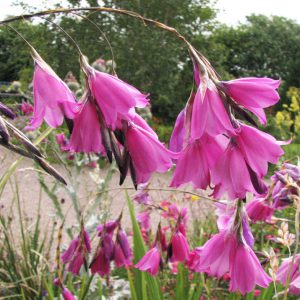
AllDierama pulcherrimum
‘Rose Pink’
ROSE PINK
FAIRY FISHING RODS
SALE: Buy 1 get 2 packs
$5.50 AUD Add to cartAdd to WishlistAlready In WishlistAdd to Wishlist