

Achillea
clypeolata
MOONSHINE YARROW
$5.50 AUD
Availability: In stock
- 1-9 pkts $5.00
- 10 pkts FREE
- Express post $12
Achillea clypeolata
MOONSHINE YARROW
Finely dissected grey foliage and butter yellow flower heads contrast wonderfully on Achillea clypeolata.
Shining silver & butter yellow
Achillea clypeolata makes a splendid show in the dry garden.
Long blooming over summer
Because it is so long blooming over summer, while the silver foliage is decorative all year round..
Excellent cut flowers
Achillea clypeolata provides excellent cut flowers of commercial quality, with strong, easily cleaned stems.
Plus those clear, sunshine yellow flower heads shine for ages in a vase.
Aromatic, insect repelling foliage
While lovely silver, feathery foliage makes a feature all year round, as it grows in a tight, neat clump, without any invasive runners.
Achillea foliage has a pleasant, spicy aroma to us, though insects dislike the scent.
Perfect dried for potpourri & insect repellent sachets
Fortunately the aromatic oils persist strongly even when the leaves are dried.
So fragrant potpourri and insect repellent sachets have traditionally been made with dried Achillea leaves.
Unflappable, tough & water-wise
This plant is certainly unflappable in tough going.
Copes with hot, dry, frosts, humidity & poorer soils
So it tolerates hot and dry conditions well; copes with summer humidity; smiles at hard frosts; and shrugs off periods of dry. It even thrives in poor soils.
(Scroll down for detailed Growing Advice)
SEED SOWING ADVICE: QUICK & EASY
Seeds can be successfully sown at any time of year, whenever suitable temperatures can be given (18-25°C).
You can simply sow the seeds directly in the garden when the soil has warmed in spring-early summer
OR
Sow seeds in a punnet indoors for early plants, whenever you can give suitable temperatures
Sow indoors for quick & early flowers: First scatter the seeds on the surface of good quality seed raising mix and press gently to ensure good contact with the mix.
But do not cover the seeds. Because these seeds need light to germinate.
Now thoroughly moisten the punnet by standing it in a shallow water bath and allowing the moisture to percolate up to the surface of the mix from below.
Then place the sown, moist punnet in a warm, well lit place (NOT in direct sunlight – as it will dry the seeds out and prevent germination).
Temperatures of 18-25°C are best for rapid and optimum germination.
Continue to keep the punnet consistently moist by misting regularly from a spray water bottle.
Covering the punnet with a clear plastic lid or plastic bag will also help to retain moisture and prevent drying out.
Seedlings emerge in approximately 5-10 days.
Remove the covering as soon as sprouts appear.
Prick out into small pots quickly, as soon as the seedlings have developed their first set of true leaves.
And grow on until ready to plant in the garden.
SEED COUNT: 300 seeds per pack approx.
(We always aim to exceed the stated seed count, and give a generous serve).
GROWING: Achillea clypeolata
– Height with flowers: Flower stems are approx. 60cm. tall, and the flowers sit well clear of the foliage clump.
– Width: Neat tight clump to a diameter of approx. 40cm. with no spreading runners. Not an invasive plant.
– Position: Full Sun. Tolerates summer heat and humidity well, as well as periods of dry.
– Water-wise: A very water wise plant, with minimal water requirement.
– Soil: Very un-fussy about soil type, though good drainage is essential. Will tolerate poor soil conditions well. Achillea flower production is best if grown a little hingry. Overfeeding produces leaf growth at the expense of strong flower stems. Best kept lean and mean. Excellent in sandy, or rocky soils. Good choice for coastal gardens.
– Frost: Extremely frost hardy, and well able to cope with hard frosts to below -20C.
– Growth: Evergreen perennial clump with pretty ferny silver foliage all year round. Makes a neat clump with no runners.
– Birds & bees: Bees and also butterflies delight in visiting the flowers for both pollen and nectar.
Achillea also attracts beneficial ladybirds.
Birds seem to favour Achillea leaves for nest lining, as it is thought the essential oils in the foliage inhibits parasites in the nest.
An extract from the essential oils is a traditional control for mosquito larvae.
– Easy Care: Easy care and low maintenance.
The clump is quickly tidied by shearing spent flower stems.
You can increase flower production further by dividing and sharing your clump every few years. But no other work is required.
– Deer & Rabbit resistant: Rabbits and deer find Achillea distasteful because the essential oils create a bitter taste in the foliage.
Hardy origins
Achillea is native to many different areas in Europe and Asia, from the heat of Turkey to the cold of Siberia; from the humidity of India to the extremes of climate in North America.
Hence the exceptional hardiness of Achilleas, and their ability to adapt to a wide range of difficult conditions.
So it is often found thriving on poor and neglected land.
Achillea clypeolata is a non-invasive garden cultivar, but equally as hardy as it’s wild (but invasive) cousins.
Traditional healing herb
Achillea has gathered a battalion of common names over the centuries.
Unsurprisingly, many names relate to its use as an antiseptic for treating wounds and staunching blood flow.
Thus common names include soldier’s woundwort, nosebleed plant, bloodwort, carpenter’s weed, knight’s milefoil, sanguinary, stanchweed, thousand seal, and scarily, death flower.
While other common names relate to its attractive foliage, scent, essential oils, and fern-like texture.
Old man’s pepper, bad man’s plaything, old man’s mustard, devil’s nettle, little feather, thousand-leaf, seven-year’s love, and yarrow, but that is just a few common names, there are even more.
Ancient history
The genus name Achillea celebrates an ancient Greek warrior, Achilles.
He also used this plant to heal war wounds.
Important for good beer
In medieval times Achillea was used as a flavouring in beer brewing, and as a preservative for beer.
Both very important roles considering water was a health hazard then.
Given their daily beer intake as a replacement for water, medieval man, and woman, must have spent a lot of time pickled,
And a pioneer plant in Australia
Early sailing ships brought Achillea with the pioneering European settlers to Australia. Pioneering farmers considered it an important ingredient in their family medicine chest, as well as fodder and tonic for their sheep.
Click here for Nursery Open Days & Open Gardens Information
https://www.gardivalia.com.au/open-gardens
Click here to go back to Seeds Shop
https://www.seedscape.net.au/shop/
Related products
-
 Add to WishlistAlready In WishlistAdd to Wishlist
-
 Add to WishlistAlready In WishlistAdd to Wishlist
-
 Add to WishlistAlready In WishlistAdd to Wishlist
-
 All
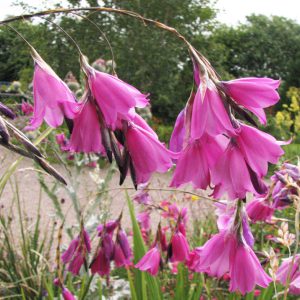
Dierama pulcherrimum
‘Rose Pink’
ROSE PINK FAIRY FISHING RODS
SALE: Buy 1 get 2 packs
$5.50 AUD Add to cartAdd to WishlistAlready In WishlistAdd to Wishlist