
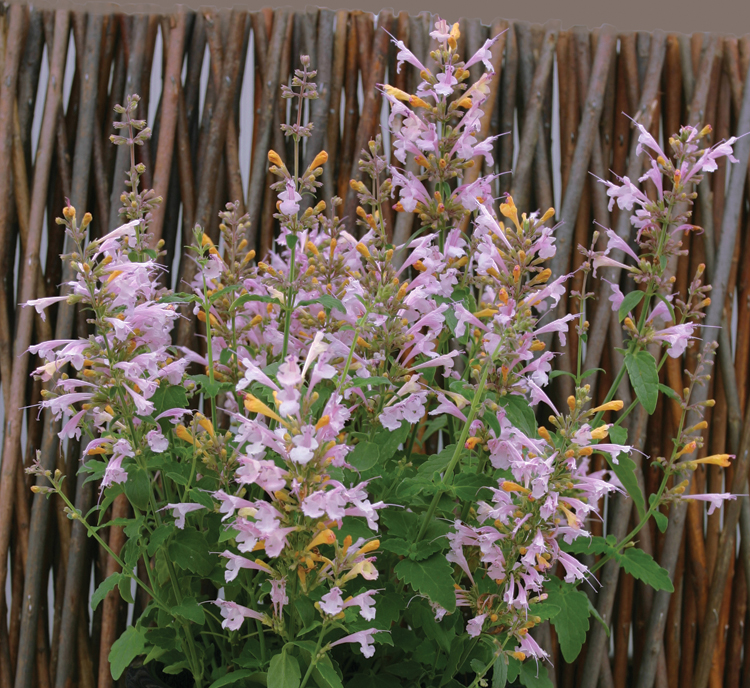
Agastache aurantiaca ‘Lavender Martini’
LAVENDER MARTINI AGASTACHE
$5.50 AUD
Availability: In stock
- 1-9 pkts $5.00
- 10 pkts FREE
- Express post $12
Agastache aurantiaca ‘Lavender Martini’
LAVENDER MARTINI AGASTACHE
Agastache aurantiaca ‘Lavender Martini’ is delicious in every way – colour, fragrance and flavour.
Delightful colouring of soft lavender & peach
The colouring of ‘Lavender Martini’ is delightful.
With soft lavender trumpet flowers emerging along the stems from peach-apricot buds.
Well spaced slender trumpets are mixed along the tems with plump peachy buds between – so ‘Lavender Martini’ is a graceful and dainty bloomer rather than being a blob of colour.
Non stop flowering for months
So it is a winning combination of delicate colour; non-stop flowering from late-spring on and all through summer and autumn; plus compact, neat growth.
Compact neat dwarf with super flower-power
Agastache aurantiaca ‘Lavender Martini’ is one of the newly bred compact, neat growing, dwarf Agastache.
So it tops out at 20-30cm. high in full bloom, and forms a neat, rounded mound approx. 20cm. across.
Perfect for edges pots & small gardens
Foliage is also slender and neat like the flower stems – so ‘Lavender Martini’ is perfect for edging the front of flower beds, making a display pot, or for featuring in a small garden.
Scented & edible – both flowers & foliage
This hardy, evergreen, shrubby perennial, with its exquisitely coloured flowers, deserves a place in every garden, and in pots as well.
But it is also worth featuring for its lovely scented, edible flowers and fruity, minty flavoured foliage.
Bone hardy & low maintenance
But when you add in a tough, bone-hardy constitution, and water-wise, easy low maintenance, then there is every reason to grow it.
Water-wise & drought resistant
Agastache aurantiaca ‘Lavender Martini’ is tough, and easily grown in Full Sun to Part Shade.
Plants are water-wise and drought resistant, so ideal for gardeners with limited water supply as well as limited space.
Frost hardy & suits wide range of soils
Plants are also hardy in frost and forgiving of a wide range of soils; including sandy, rocky and poor soils.
Perfect for coastal or windy gardens
And ideally suited to coastal areas, windy, and hot and dry gardens; as well as pots.
Quick & easy from seed to flower
If seed is sown early indoors, the plants will flower happily in their first summer from sowing the seed.
Quick & easy to grow in the garden
Agastache aurantiaca ‘Lavender Martini’ is a low maintenance plant, and largely untroubled by any pests and diseases.
The only work required is to cut the whole plant back hard before spring to encourage new growth.
It is a hardy perennial clump, and quick growing for fast garden effect and flowers.
Delicious flavours for cooking
‘Lavender Martini’ is a special treat for the cooks and productive gardeners amongst us.
As flowers and foliage are very useful in the kitchen, both being edible.
Use the minty flavour in cakes, in salads (where the flowers really liven up the visual appeal), in drinks (where the flavour puts a whole new dimension on a G&T or a Daquiri), or to add an edible garnish to a meat dish or stir-fry (leaves go really well with chicken and fish).
Good cut flowers for vases
The delicate lavender and peach coloured flower stems make good cut blooms for a vase indoors, where they last well.
Native honey-eater birds adore the flower trusses
But for me it is the entertainment provided by our native honey-eating birds that make all Agastache indispensable in my garden.
Our Honeyeaters acrobatically dance amongst the flowers and do fine impersonations of Hummingbirds, while sipping nectar from the flowers,
Months & months of bloom for bees
As Agastache ‘Lavender Martini’ blooms continuously for months on end, from late spring to autumn’s close, it is a blessing for all our useful pollinators.
Providing an invaluable and long lasting food source for bees, butterflies, birds and other useful pollinators – so plant some in your veggie plot or orchard.
Rabbits & deer cant abide Agastache
And to top it all off – rabbits and deer cannot abide the aromatic oils in the foliage and flowers of Agastache – so they leave them alone. Bless all Agastache.
SEED SOWING ADVICE: QUICK & EASY
Suits beginners & gardening with kids
Sow seeds directly in the garden during spring or autumn.
OR
Sow at any time indoors in a punnet, when suitable temperatures are available (18-20°C). You can use a heat mat but not essential.
Sow indoors for quick plants & early flowers: First sow the seeds in a punnet on the surface of good quality seed raising mix.
Then pat the seed gently into the surface of the mix.
But do not cover because these seeds need light to germinate.
Now thoroughly moisten the mix by standing the punnet in a shallow water bath, and allowing the water to percolate up to the mix surface from below.
This will ensure the mix is thoroughly moist but not drenched.
Label the punnet with the name and date sown.
Place in a well lit position, but not in any direct sunlight.
Temperatures of 18-20C approx. are best for rapid germination, but these seeds are not particularly fussy.
(An electronic heat bed is ideal but not essential – any warm, well-lit spot will do).
Keep the punnet consistently moist by misting the surface with a water spray bottle.
Covering the punnet with a clear plastic lid or plastic bag will also help to maintain consistent moisture and prevent drying out.
At optimum temperature seedlings emerge in approx. 14-28 days.
Prick seedlings out as soon as they develop their first set of true leaves into pots, and grow on until ready to plant out in the garden.
Seed Count: 20 seeds per packet approximately.
(We always aim to exceed the stated count and give a generous serve)
Click here for Nursery Open Days & Open Gardens Information
https://www.gardivalia.com.au/open-gardens
Click here to go back to Seeds Shop
https://www.seedscape.net.au/shop/
Related products
-
 Add to WishlistAlready In WishlistAdd to Wishlist
 -
 Add to WishlistAlready In WishlistAdd to Wishlist
 -
 Add to WishlistAlready In WishlistAdd to Wishlist
 -
 Add to WishlistAlready In WishlistAdd to Wishlist