
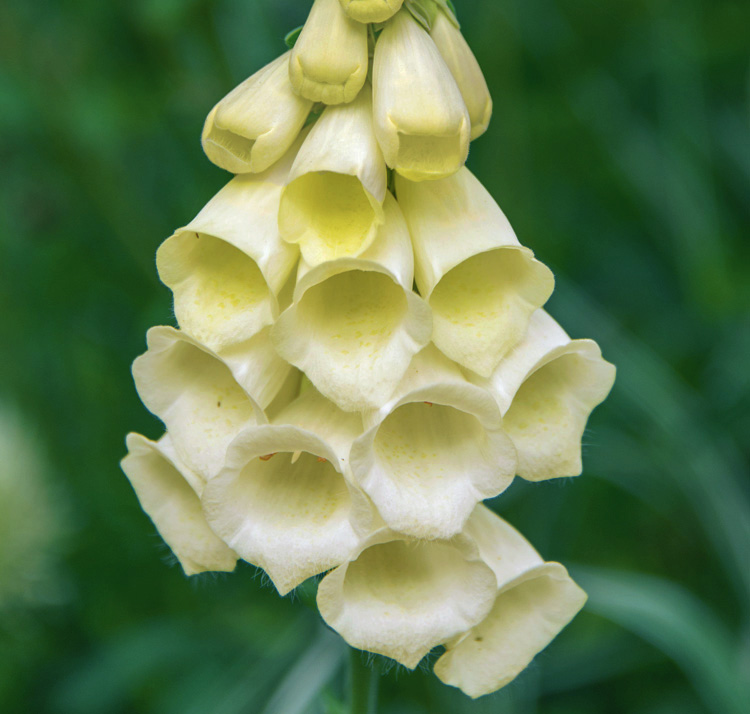
Digitalis grandiflora
‘Cream Bell’
CREAM DWARF PERENNIAL FOXGLOVES
No Tas.
$5.50 AUD
Availability: In stock
- 1-9 pkts $5.00
- 10 pkts FREE
- Express post $12
Digitalis grandiflora ‘Cream Bell’
CREAM DWARF PERENNIAL FOXGLOVES
Digitalis grandiflora ‘Cream Bell’ is a conveniently long-lived perennial Foxglove, rather than just a short-lived biennial.
Not permitted for entry into Tasmania.
Rich Cornish Cream coloured Foxgloves
Digitalis grandiflora ‘Cream Bell’ produces “Foxes’ Gloves” flowers of elegant, soft cream, with top buds of rich clotted Cornish cream colour.
Elegant plants prized by stylish designers
It is a very elegant plant in both form and colour, and much prized by stylish garden designers
Spires of plump “Foxe’s Gloves” bells
The bells are usually unblemished by any spots, and are close packed and broad.
Making plump, sumptuous, but compact spires.
Gracefully borne flower spikes on dwarf plants
Graceful spires of creamy bells are borne on compact, dwarf plants – perfect for pots, small gardens, or windy spots where giant spires may be bowled over.
Evergreen perennial foxglove – giving you many years of bloom
‘Cream Bell’ makes a perennial evergreen rosette of dark green, pointed, leaves, which is permanently with you for many years.
Then it delivers the spires of dainty blooms every year, during spring and summer.
Because it is a hardy, evergreen perennial, not a short-lived biennial like normal Foxgloves.
Long blooming with multiple branching flower spires
The multiple branching flower stems of ‘Cream Bell’ means it is in flower for much longer than traditional Foxgloves.
Instead it produces from late-spring right into late summer, with repeating spires and side-branches.
Copes with dry & heat plus winter cold well
Digitalis grandiflora is a super hardy and adaptable perennial Foxglove.
Well able to cope with dry, heat and cold conditions.
As it has a wide native range where it grows wild – from the summer heat of Turkey to the winter cold of Siberia.
Super hardy charm without any fuss
So this hardy perennial is ideal for adding charm, without fuss.
Just plant in a Part Shade to Shaded position, or in Sun and let it get on with it.
It can also cope with drier conditions than most Foxgloves, once it is established.
Built to cope with more heat, dry & frost
Because it is naturally built to cope with more summer heat and drier conditions than normal Foxgloves, as well as hard frosty winters.
Dainty cut flowers on strong stems
The multiple spires of creamy bells are strongly self supporting in the garden, and make good cut flowers.
Copes with a wide range of soils & even clay
Hardy ‘Cream Bell’ Foxgloves cope with a wide range of soils.
So they can be grown in sandy, rocky soils or good garden loam; as well as heavier soils and clay.
After all it has a very wide range of natural habitat.
So it can also tolerate a wide range of soil pH – from acid to alkaline.
Perennial parent plus babies in the garden
Digitalis grandiflora ‘Cream Bell’ will self seed with volunteer babies for you, as well as the original perennial clump going on for multiple years.
Bees, native birds & pollinators just love foraging in the creamy bells
The stacked bells are high-rise larders for bees (both native and honey-bees), native honey-eating birds, and other useful pollinating insects.
While rabbits & deer wont touch
While rabbits and deer steer clear of the Digitalis family, including Digitalis grandiflora ‘Cream Bell’.
Evergreen & long lived perennial
Dainty 30-60cm. High spires of flowers x 45cm. Wide perennial evergreen rosette of neat foliage.
SEED SOWING ADVICE: QUICK & EASY
Suitable for beginners & gardening with kids
Seeds can be scattered directly in the garden in spring, where they are to grow.
OR
Sow the seeds in a punnet indoors whenever suitable temperatures can be provided (15-20°C) – for early quick plants.
Sow indoors for optimum germination & early plants: First sow the seeds in a punnet on the surface of good quality seed raising mix.
But do not cover with mix, as these seeds need light to germinate.
Now thoroughly moisten the punnet by standing it in a shallow water bath, and allowing the moisture to percolate up to the surface of the mix from below.
Drain, then place the punnet in a warm well-lit place or on a heat mat (not in nay direct sunlight).
We recommend temperatures of 15-20°C for rapid and optimum germination.
Continue to keep the mix consistently moist by misting from a spray water-bottle.
Covering the punnet with a clear plastic lid / plastic bag will also help to maintain consistent moisture and prevent drying out.
Seeds germinate in 14 to 30 days approx.
Prick the seedlings out quickly, as soon as they have developed their first set of true leaves, and pot up.
Grow seedlings on to harden off and mature before finally planting out in the garden.
Seed Count: 20 seeds per pack approx.
(We always aim to exceed the stated seed count, and give a generous serve).
Click here for Nursery Open Days & Open Gardens Information
https://www.gardivalia.com.au/open-gardens
Click here to go back to Seeds Shop
https://www.seedscape.net.au/shop/
Related products
-
 Add to WishlistAlready In WishlistAdd to Wishlist
 -
 Add to WishlistAlready In WishlistAdd to Wishlist
 -
 Add to WishlistAlready In WishlistAdd to Wishlist
 -
 Add to WishlistAlready In WishlistAdd to Wishlist