
Iris tectorum
JAPANESE ROOF IRIS
$5.50 AUD
Availability: In stock
- 1-9 pkts $5.00
- 10 pkts FREE
- Express post $12
Iris tectorum
JAPANESE ROOF IRIS
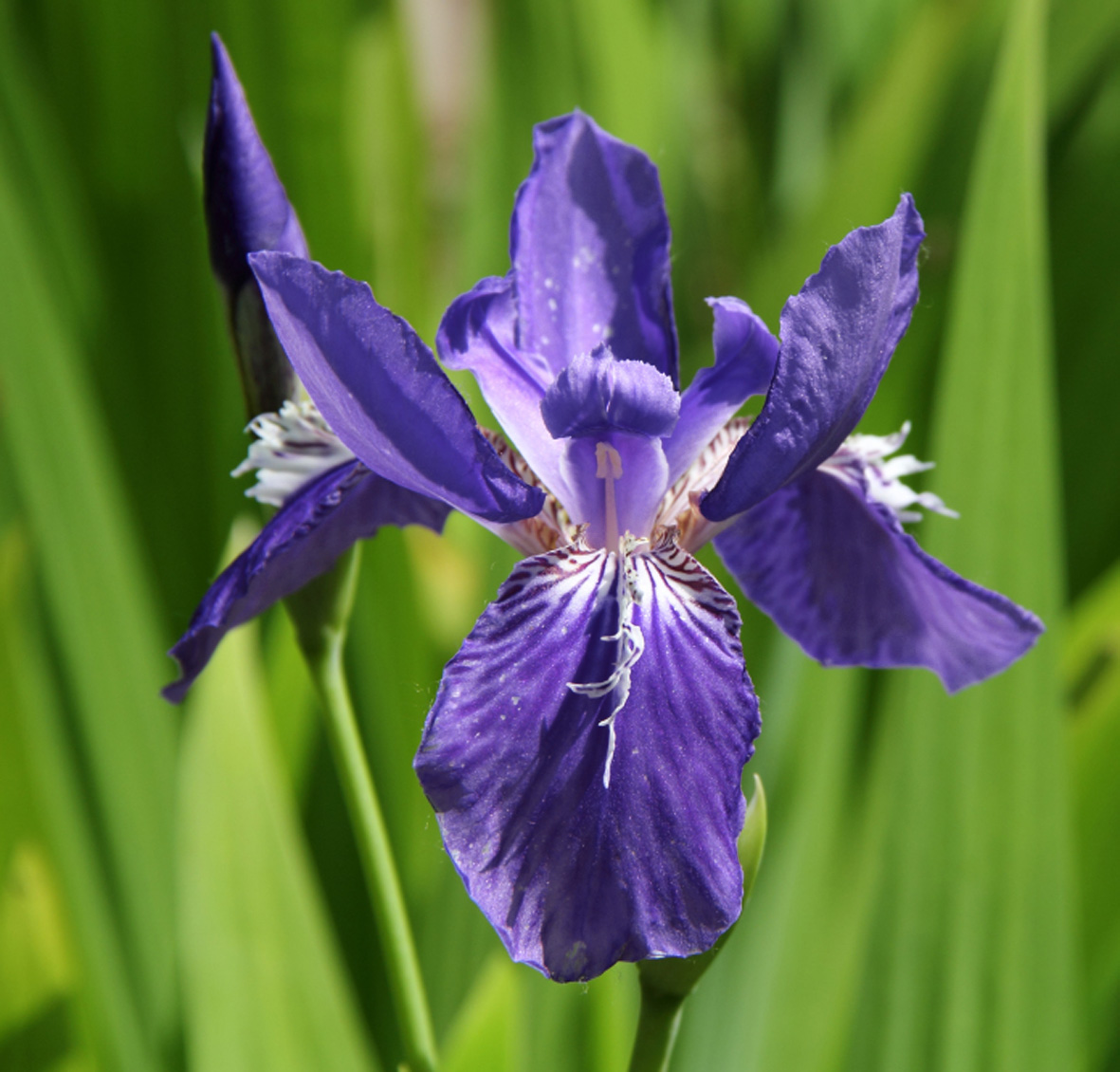
Iris tectorum has showy violet-blue Iris blooms, with beautiful lace markings.
Violet-blue blooms, with beautiful lace markings & shaggy crests
The flowers of Iris tectorum are large, with elegantly formed petals and beautiful, shaggy white crests.
Neat compact clump of sword foliage
And the lovely, refined blooms are held proudly in spring and early summer, floating on branching stems, above a neat clump of arching sword foliage, approx. 30cm high.
So there is nothing coarse about any part of this plant – it is pure class from top to toe.
Decorative foliage feature all year
Iris tectorum is often used mass planted between and around trees and shrubs.
Because of the decorative quality of the evergreen, arching fans of foliage, all year round.
With the floating spring-early summer flowers as a brilliant bonus.
Low maintenance groundcover amongst trees & shrubs
It is a low maintenance but very decorative option for a gently spreading groundcover amongst trees & shrubs.
Iris tectorum is native to woodlands in China and Japan.
Shade tolerant Iris
Many Iris demand full sun, but Iris tectorum is one that can bloom happily in either full sun; or some shade for part of the day; or even bright dappled shade positions.
It can happily make beautiful blooms without having full sun all day.
Though it is also happy in full sun if needed.
Thrives in either dry or damp soils
Iris tectorum is also obligingly easy to grow.
As it can thrive in soils on either the dry or damp side.
Though it does love plenty of humus, such as mulch, compost or old leaves to enrich the soil.
And will thank you for a light dressing of fertilizer after blooming, by making even more flowers (unlike many other types of Iris who like to live lean and mean).
Water efficient & drought hardy
It is a water efficient plant that does not demand a lot of water to thrive and flower beautifully.
It is usefully drought resistant
So Iris tectorum can tolerate periods of dry and also tolerate periods of wet if necessary – it really is an easy plant to please.
Or can tolerate heavy clay soils
Iris tectorum is one of only a handful of Iris that can cope with heavy clay soil too.
Plus tolerates summer humidity
This is one Iris that can thrive in humid summer climates.
Winter frost hardy
Iris tectorum is not upset by frost and handle frost temperatures down to -10°C out in the open.
Though as it usually planted amongst tress and shrubs even more severe frosts are unlikely to trouble it.
Lovely blooms to cut for a vase
The blooms of Iris tectorum make lovely cut flowers for vases, where they last well in water.
Rabbit & deer resistant
While Iris tectorum is not considered a toxic or poisonous plant (the starch from the root is actually used a food ingredient in traditional Chinese and Japanese cuisine – though it is not recommended today).
But rabbits and deer generally avoid it in favour of tastier fodder.
Boon of nectar & pollen for bees & pollinators
The blooms of Iris tectorum are a great help to bees and all our useful pollinating insects – as they are rich in both pollen and nectar.
All those lovely lace markings and the fuzzy crests, are all designed to flag the bees in to the rich rewards.
Roots to create a flawless complexion for Japanese Ladies
The swollen roots of Iris tectorum have been used for centuries by Japanese ladies, to enhance their beauty.
So the roots are dried, then ground to a fine, white powder, and used to powder the face to a flawless complexion.
An Iris to bind thatched roofs
Iris tectorum has also been used for centuries to plant along the roof ridges of traditional Japanese thatched houses.
Where it conveniently binds the thatch and also help prevent damage by perching birds.
But the roof was also a convenient place for the lady of the house to keep her complexion enhancing Iris safely, without occupying valuable space for food production.
The Emperor had decreed that all land had to be used for food production during times of war, so no self-respecting Japanese lady would risk her Iris, or her complexion.
SEED SOWING ADVICE: Iris tectorum
Sow in a punnet indoors, whenever suitable temperatures can be given (16-21°C)
OR
Scatter directly in the garden during autumn or winter.
Sow indoors for optimum germination & quick plants: First rub the seeds between your hands with some sharp sand to score the seed case.
Then soak the seeds in warm (not boiling) water and leave to stand in the water for 24 hours.
So the seeds swell and take water on board.
Now sow the seeds in a punnet, on surface of good quality seed raising mix.
And cover the seeds with sieved mix/grit/sand/vermiculite to a depth same as the diameter of the seeds.
Then thoroughly moisten the punnet by standing it in a shallow water bath and allowing the moisture to percolate up to the surface of the mix from below.
Now place the punnet in a warm, well-lit position 9but not in any direct sunlight) for pre-conditioning.
Temperatures of 16 to 21°C are ideal for this pre-conditioning stage.
Continue to keep the punnet consistently moist at for 2-4 weeks, by misting it from a spray water bottle.
Then wrap the moist punnet in cling wrap & place in fridge (not freezer) for 4-6 weeks for chilling.
Then remove the punnet from the fridge, unwrap & place again in the well-lit position again (not in any direct sunlight) at temperatures 12-21°C.
Seedlings emerge within approx. 30 days.
But patience – do not discard punnet, as some seedlings may come later.
Seed Count: 15 seeds per pack.
(We always aim to exceed the stated seed count and give a generous serve).
Click here for Nursery Open Days & Open Gardens Information
https://www.gardivalia.com.au/open-gardens
Click here to go back to Seeds Shop
https://www.seedscape.net.au/shop/
Related products
-
 Add to WishlistAlready In WishlistAdd to Wishlist
 -
 Add to WishlistAlready In WishlistAdd to Wishlist
 -
 Add to WishlistAlready In WishlistAdd to Wishlist
 -
 Add to WishlistAlready In WishlistAdd to Wishlist