
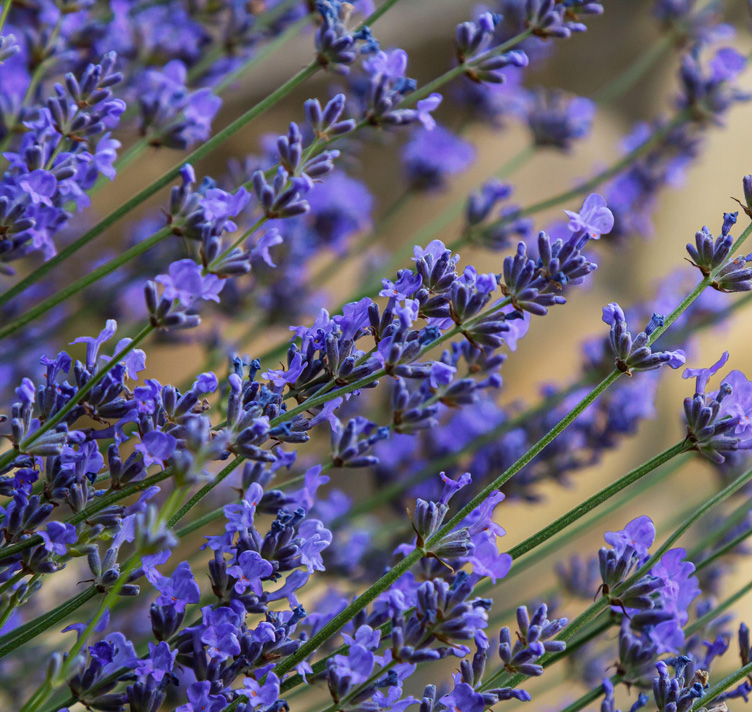
Lavandula angustifolia
‘Hidcote Blue’
HIDCOTE BLUE LAVENDER
$5.50 AUD
Availability: In stock
- 1-9 pkts $5.00
- 10 pkts FREE
- Express post $12
Lavandula angustifolia ‘Hidcote Blue’
HIDCOTE BLUE ENGLISH LAVENDER
Lavandula angustifolia ‘Hidcote Blue’ is an even bluer version of the original ‘Hidcote Lavender’.
Prince of English Lavenders goes even more blue
The original ‘Hidcote Lavender’ is considered the prince amongst English Lavenders, because of it’s rich flower colour, and compact tight growth.
But Lavandula angustifolia ‘Hidcote Blue’ is a new, even more blue version of the old favourite.
With enhanced bloom production, plus compact, neat growth
Hidcote Lavender was of course developed at that quintessential great English garden – Hidcote Manor.
Nothing but the best at Hidcote garden
The original ‘Hidcote Lavender’ was the favourite of acclaimed gardener Lawrence Johnston (no relation to me I am afraid).
And Lawrence would have nothing but the best in the garden he created at Hidcote Manor.
So he would have loved and approved of this new, even more blue cultivar, of his famous ‘Hidcote Lavender’
Intense Fragrance
Lavandula angustifolia ‘Hidcote Blue’ has divine fragrance, as intense as the best English Lavenders.
Few of us could ever be without the perfume pleasure of sniffing English Lavender.
And you just can’t resist the temptation to pick some flowers or foliage every time you pass, rub it in your hands, and drink in the scent. (The plant won’t mind – they love being trimmed).
Rich blue-lavender heads against silver-grey foliage
And the rich blue-lavender flowers contrast so very well against the silvery-grey foliage.
Ideal for low hedges – naturally neat & compact
‘Hidcote Blue’ is an ideal plant for low hedges, either clipped or unclipped, as it is naturally a neat and compact grower.
It grows naturally to a rounded, tight 40cm. tall, evergreen shrub (or actually ever-silver) . Making it perfect for low garden hedges, trimming into decorative balls, or featuring in a pot.
Or ideal in a feature pot
So it is also perfect featured in a pot for fragrance, colour and hardiness.
Useful for cooks & florists
It is also useful in the kitchen for cooking, making potpourri, and in vases of cut flowers.
Fills summer with the buzzing of busy bees
It flowers around mid-summer, with a rich sweet scent – highly attractive to bees as well as to us gardeners.
Our pollinator friends, both native and honey-bees, are highly attracted to the lovely blue colouring.
Water-wise, loves heat & drought hardy
English Lavender relishes a position in Full Sun, where it can really ripen its flowers and intensify the essential oils.
So Lavandula angustifolia ‘Hidcote Blue’ is a very water-wise choice for gardeners with limited water.
And it is drought resistant, and toughly hardy in heat and frost.
Loves lime, good drainage & dry
Lavandula angustifolia ‘Hidcote Blue’ will tolerate acid soil, but really thrives in alkaline soils.
So make sure you treat it with a handful of lime twice a year.
And it will hate you if you plant it in a heavy or waterlogged spot.
Rabbit & deer resistant
Lavandula angustifolia ‘Hidcote Blue’ is almost never, or very rarely, nibbled by rabbits and deer.
As the high concentration of essential oils makes English Lavender unpalatable to them.
SEED SOWING ADVICE:
Sow seed of Lavandula angustifolia ‘Hidcote Blue’ in winter to late spring, or in late summer to autumn.
OR
Can be sown indoors at any time that suitable temperatures can be provided (18-20°C)
Sow indoors for optimum gemination & quick plants: Sow the seed in a punnet on the surface of a well-drained, seed raising mix.
Tip for improving the germination of Lavender seed: Before sowing – briefly, gently rub seeds between sheets fine sandpaper to allow moisture to more easily penetrate the hard seed surface.
Then sow the seed on the surface of good quality seed raising mix.
Press gently to ensure good contact between the seed and the mix.
But then barely cover with mix, as these seeds need light to germinate.
Now thoroughly moisten the sown punnet by standing it in a shallow water bath, and allow the water to percolate to the surface of the mix from below.
Then place the sown, moist punnet in a warm, well-lit place (not in any direct sunlight).
Temperatures of 18-20°C approx. are optimum for fast germination.
You can use a heat mat if you have one.
Continue to keep the punnet consistently moist by misting regularly from a spray water-bottle.
Seedlings begin to emerge in 21-30 days approx.
However – If the seeds are shy to break dormancy – then cling-wrap the moist, sown punne,t and place in the fridge (not freezer) for 3 weeks.
This mimics the effect of winter-chilling to break the seed’s natural dormancy
Then remove from fridge, unwrap punnet & return to warm, well-lit place. Continue to keep consistently moist.
Prick out the baby seedlings as soon as the emerge and develop their first set of true leaves.
Pot up to grow on to garden size.
Seed Count: 60 seeds per pack approx.
(We always aim to exceed the stated seed count, and give a generous serve).
Click here for Nursery Open Days & Open Gardens Information
https://www.gardivalia.com.au/open-gardens
Click here to go back to Seeds Shop
https://www.seedscape.net.au/shop/
Related products
-
 Add to WishlistAlready In WishlistAdd to Wishlist
 -
 All
AllLinaria triornithophora
‘Three Birds Flying’
3 BUDGIES
SALE: Buy 1 get 2 packs
$5.50 Add to cartAdd to WishlistAlready In WishlistAdd to Wishlist -
 Add to WishlistAlready In WishlistAdd to Wishlist
 -
 Add to WishlistAlready In WishlistAdd to Wishlist