
Aquilegia
rockii
ROCK’S COLUMBINE GRANNY BONNETS
$5.50 AUD
Availability: In stock
- 1-9 pkts $5.00
- 10 pkts FREE
- Express post $12
Aquilegia rockii
ROCK’S COLUMBINE
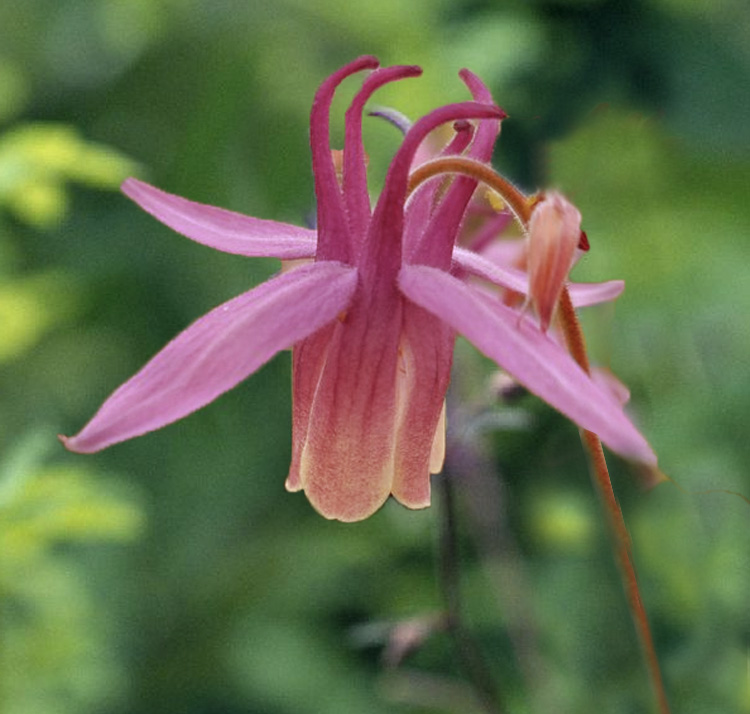
Aquilegia rockii has rich and lavish colour on large Columbine flowers.
Flocks of rosy-lavender, creamy edged blooms
The blooms on Rock’s Columbine are large and showy, with delicate rose and lavender shading to creamy petal edges.
Aquilegia rockii gives a big show from a compact plant
Flowers are larger than average Granny Bonnets, but borne on a compact, neat plant.
So it is very suitable for small gardens or pots, as well as fronting a flower garden bed.
Prolific bloomer after other Columbines
This charming beauty blooms prolifically later in spring and into summer.
Blooming later than most other Columbines – So extending the season of Aquilegia beauty.
Pretty blooms to cut for vases
Bringing a warm blush of rosy colour, and plenty of flowers to cut for vases.
Particularly nice foliage
Aquilegia rockii also has particularly lovely foliage.
Because leaves are edged with a dark purple rim, with each flush of new foliage.
Ideal under trees & shrubs
Where the clumps thrive in the Dappled Shade or Morning Sun.
Though they can also happily take more sun in cooler districts, or where they are well mulched.
Dry shade tolerant
Plants are Dry Shade tolerant once established.
Water-wise frost & heat hardy
And also water-wise and frost and heat hardy once established.
Make undemanding groundcover in shade
So mass plantings make undemanding groundcover under trees and shrubs, which can be troublesome territory.
Useful for florists
Aquilegias are very charming in bouquets and floral arrangements.
Tip for cutting flowers for best vase life
To give the cut stems maximum vase life – First sear the stem ends in boiling water and then stand them in deep cold water for several hours before using in an arrangement.
Rabbit & deer resistant
Rabbits and deer generally leave the foliage of Aquilegias completely alone.
Though of course a starving critter will take a chomp on anything – but they will certainly not graze, as they dislike the taste of Aquilegias.
Joy for Bees & pollinators
What self respecting bee or butterfly could resist those pollen laden stamens, so prominently displayed.
And the nectar filled, shorter spurs that are accessible to all comers.
Adored by native honey eating birds
Our native honey-eating birds, including our beloved Eastern Spinebills, also find the abundant flowers on large, branching stems – very comfortable indeed.
Hardy evergreen perennial clump
Aquilegia rockii makes a hardy, evergreen perennial clump.
60cm. High in bloom x 30cm. Wide of dainty evergreen foliage.
SEED SOWING ADVICE:
Sow seeds any time indoors in a punnet, whenever suitable temperatures can be provided (15- 24°C).
OR
Sow directly in garden in autumn and winter.
Aquilegias germinate easily in the garden after chilling by the cold of winter.
Sow indoors for optimum germination & quick plants: First sow the seeds on the surface of good quality seed raising mix.
Then barely cover the seeds with some sieved mix.
Because these seeds need light to germinate.
Now thoroughly moisten the punnet by standing in a shallow water bath. Allow the moisture to percolate up to the surface of the mix from below.
Then place the sown punnet in a warm, well-lit position (not in direct sunlight)
Temperatures of 15- 24°C approx. are ideal for rapid and optimum germination.
Seedlings may begin emerging as soon as 10 days, but within 21-28 days.
However if there is no germination after 4 weeks it means the seeds are dormant and require a period of chilling.
So wrap the moist, sown punnet in cling-wrap and keep in fridge (not freezer) for 4-6 weeks.
Then return to a well lit position at 15-24C for germination.
However do not discard the punnet as seeds will continue to germinate for a staggered period after the chilling.
Seed Count: 50 seeds per pack approx.
(We always aim to exceed the stated seed count and give a generous serve).
GROWING: Aquilegia rockii
Height with flowers: 60 cm. High branching flower stems with flocks of elegant flowers.
Width: 30cm. Wide evergreen clump of ferny foliage.
Position: Plant in a shaded, semi shaded, to sunny position. Aquilegias thrive in the dappled shade under trees and shrubs, and under deciduous trees.
However this hardy variety can also thrive in full sun, but it will need more mulch in hotter areas.
Growth: Hardy and long-lived, evergreen perennial clump.
And plants will also self-seed babies around themselves in suitable conditions.
Hardy & Easy to grow
Soil: Aquilegia can thrive in a variety of soils, from sandy to clay based. And they can cope with pH on either the acid or alkaline side of neutral.
Soil enriched with compost and mulch is perfect.
However all soils must be well drained because Aquilegia hate being waterlogged.
Frost: Very frost hardy. Aquilegia plants are able to cope with hard frosts, down to at least -15C, depending on conditions.
Water-wise
Water: Aquilegias are not thirsty, water-demanding plants. Especially when they are grown in their preferred positions in the semi-shade under trees and shrubs. Here they can resist periods of dry, requiring no more than average garden watering in warmer periods.
Versatile for pots garden & cut flowers
Pots: Aquilegia rockii is lovely in a decorative pot, where both flowers and foliage contribute.
Cut Flowers: Aquilegia rockii gives plenty of excellent cut flowers for a vase. With striking flowers and long strong stems. Cut blooms can last for up to 2 weeks indoors.
Bees & Birds: The flowers provide nectar for bees, and are also visited by butterflies, moths, and other beneficial pollinating insects.
Low care
Care & Maintenance: Easy care, low maintenance plant.
If you wish to prevent baby Aquilegias from popping up you can trim off spent flower stems.
Or you can leave seed pods to self-sow more babies around the parent plant. Aquilegias are never annoying or a nuisance.
Fertilizer: Fertilizer can be applied in spring and autumn.
We also recommend to water in with fish or seaweed products at planting.
Pruning: You can cut the clump back to the socks to re-generate fresh, new leaves if necessary. However, Aquilegia do not need any regular pruning other than to trim off spent flower stems once a year.
Avoided by rabbits and deer
Pests & Diseases: Rarely troubled by any pests or diseases.
Deer & Rabbit resistant: Aquilegia have an unpalatable taste to both rabbits and deer because of compounds in the leaves. So the chewing pests tend to leave Aquilegia plants well alone.
Herbal, History & Uses
Herbal uses: Aquilegia was historically used for herbal medicine by treating infected wounds with teas and poultices.
However, the consumption and internal use of Aquilegia is not recommended by modern science. Thankfully deer and rabbits seem to know this too.
While the most popular historic use of Aquilegia was as a treatment treating head lice. So seeds would be ground up and rubbed into lice-ridden hair.
Happily, our modern chemists have less labour-intensive treatments on their shelf.
History: The name Aquilegia originates from Latin where the word for eagle is “aquila”.
So Aquilegia because the shape of the spurred flower does indeed resemble the claw of an eagle.
The common name “Columbine” also comes from Latin where the word “columba” means “dove”. So when we call them Columbines, we refer to an Aquilegia bloom resembling five doves billing and cooing together.
Origin: Aquilegia vulgaris, in very many varieties and forms, is a native to the woodlands of Europe. Because it is such a hardy and adaptable plant it is widespread across the continent and has been able to develop so many highly attractive variations.
Click here for Nursery Open Days & Open Gardens Information
https://www.gardivalia.com.au/open-gardens
Click here to go back to Seeds Shop
https://www.seedscape.net.au/shop/
Related products
-
 Add to WishlistAlready In WishlistAdd to Wishlist
 -
 Add to WishlistAlready In WishlistAdd to Wishlist
 -
 Add to WishlistAlready In WishlistAdd to Wishlist
 -
 Add to WishlistAlready In WishlistAdd to Wishlist