
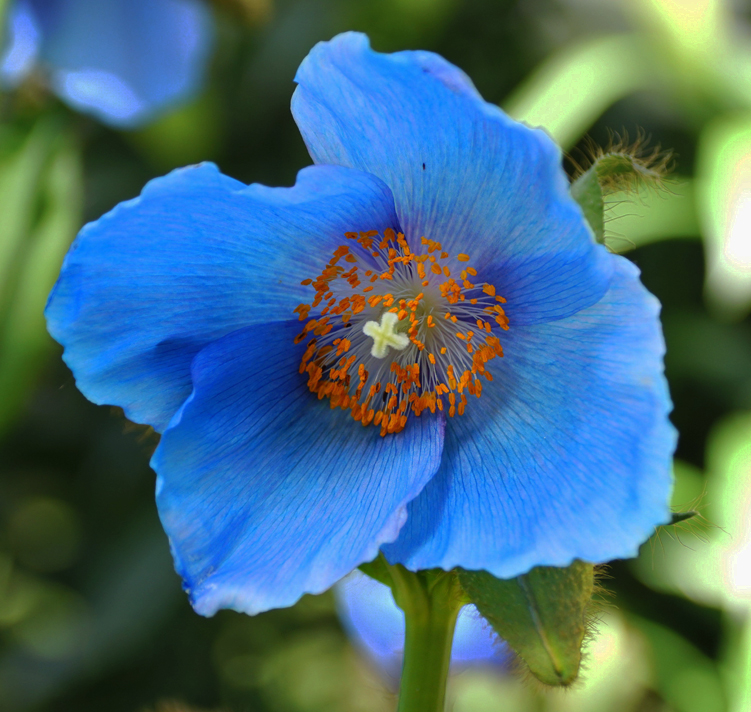
Meconopsis x sheldonii ‘Lingholm’
LINGHOLM BLUE POPPIES
COLLECTOR’S PACK
$7.50 AUD
Availability: In stock
- 1-9 pkts $5.00
- 10 pkts FREE
- Express post $12
Meconopsis x sheldonii ‘Lingholm’
LINGHOLM BLUE POPPIES
COLLECTOR’S PACK
Meconopsis x sheldonii ‘Lingholm’ is one of the “Holy Grails” for gardeners.
Huge deep cobalt blue Poppies – a holy grail for gardeners
Huge, deep cobalt blue single poppy flowers – up to 10 cm across – are simply sensational.
Once you have seen one, you are smitten, and cannot think of anything else except possessing one.
A prince amongst Blue Poppies
All Himalayan Blue Poppies are wondrous.
But ‘Lingholm’ is far superior to the more commonly seen Meconopsis baileyii (otherwise known as Meconopsis betonicifolia).
Superior growth & colour
Because ‘Lingholm’ clumps up, multiplies quite readily, and can be divided to bulk up your display.
Not to mention the sensational bluest of blue colour of course.
Treasure for shade
Like all Himalayan Blue Poppies, Meconopsis x sheldonii ‘Lingholm’ enjoys a sheltered, shaded, cool spot in the garden or in a pot.
With humus rich, damp, well drained neutral to acid soil.
Secret for success
The secret is to find a place where you can keep the humidity in the air up – so a moist shade house or fernery area is perfect.
Once you have your treasure happily settled it will both clump up and self seed for you.
Ultimate bragging rights
And then you take photographs from every angle, open a Facebook account, and brag unmercifully.
80cm. High in flower x 50cm. Wide perennial foliage clump.
SEED SOWING ADVICE:
Meconopsis seeds can be sown at any time in good quality seed raising mix, whenever suitable cool temperatures can be provided (12-15°C).
First sow the seeds in a punnet, on the surface of good quality seed raising mix.
And cover seeds thinly with sieved seed raising mix / washed sand / fine grit / or fine vermiculite..
Sowing Tip: Meconopsis seed is exceptionally fine (like dust). So it is a good idea when you open the seed packet to put a little fine sieved mix or fine sand in. Then shake around well. This will pick up the seed and make it easier for you to distribute it evenly onto the surface of the punnet.
Then thoroughly moisten the sown punnet by standing it in a shallow water bath and allowing the moisture to percolate up to the surface of the mix from below.
Now place the sown, moist punnet in a cool spot.
The position should be well-lit but not in any direct sunlight at any time, as this will dry out the seeds.
Temperatures of around 12-15°C are ideal.
And the seeds do not mind cold night temperatures.
The seeds and mix should be kept consistently moist and never allowed to dry out.
So mist regularly from a spray water bottle.
Covering the punnet with a clear plastic cover or plastic bag will also help to retain consistent moisture.
No artificial heat is needed, as excess heat can cause rapid germination and fungal attack, or make the seeds go into a deeper dormancy.
Seedlings usually appear within 3 to 6 weeks but some can take much longer.
But this is a normal process in nature to stagger germination, to ensure some seeds will germinate into a variety of conditions. So do be patient and do not discard the punnet.
If the seeds are shy to germinate – then wrap the moist, sown punnet in cling-wrap, and place in the fridge (not freezer) for 4-6 weeks.
This mimics a nice cold winter, and promotes germination when they are brought out to the cool place again.
When the seedlings have a set of true leaves, pot on into small pots and protect from hot sun.
Then plant out in a shaded, moist humus rich slightly acid soil.
It is natural for some Meconopsis plants to be herbaceous and die down to a large resting bud.
Seed Count COLLECTOR’S PACK: 4 seeds per pack.
(Seed of this superior blue poppy strain is very scarce).
Click here for Nursery Open Days & Open Gardens Information
https://www.gardivalia.com.au/open-gardens
Click here to go back to Seeds Shop
https://www.seedscape.net.au/shop/
Related products
-
 Add to WishlistAlready In WishlistAdd to Wishlist
 -
 Add to WishlistAlready In WishlistAdd to Wishlist
 -
 Add to WishlistAlready In WishlistAdd to Wishlist
 -
 Add to WishlistAlready In WishlistAdd to Wishlist